Going back
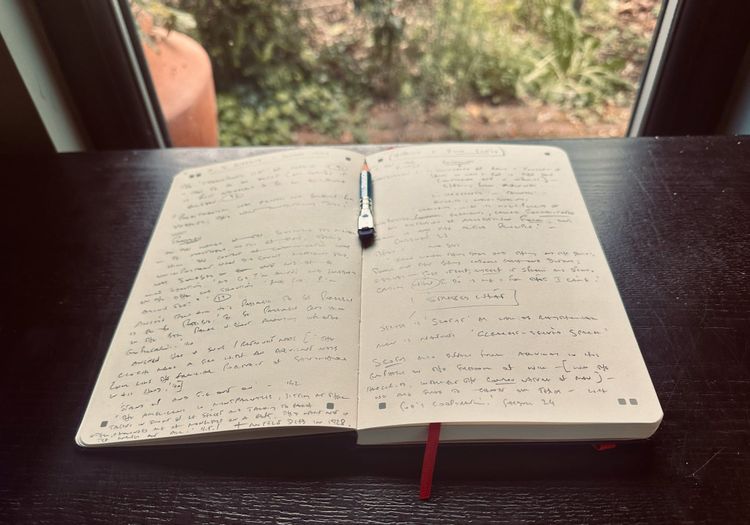
As I wrote in my notebooks, the mystics believe the ideal man shall walk himself to a 'right death'. He who has arrived 'goes back'.
In Aboriginal Australia, there are specific rules for 'going back' or, rather, for singing your way to where you belong: to your 'conception site', to the place where your tjuringa is stored. Only then can you become – or rebecome – the Ancestor...
....In a clearing there were three 'hospital' bedsteads, with mesh springs and no mattresses, and on them lay the three dying men. They were almost skeletons. Their beards and hair had gone. One was strong enough to lift an arm, another to say something. When they heard who Limpy was, all three smiled, spontaneously, the same toothless grin.
Arkady folded his arms, and watched.
'Aren't they wonderful?' Marian whispered, putting her hand in mine and giving it a squeeze.
Yes. They were all right. They knew where they were going, smiling at death in the shade of a ghost-gum.
Bruce Chatwin, The Songlines
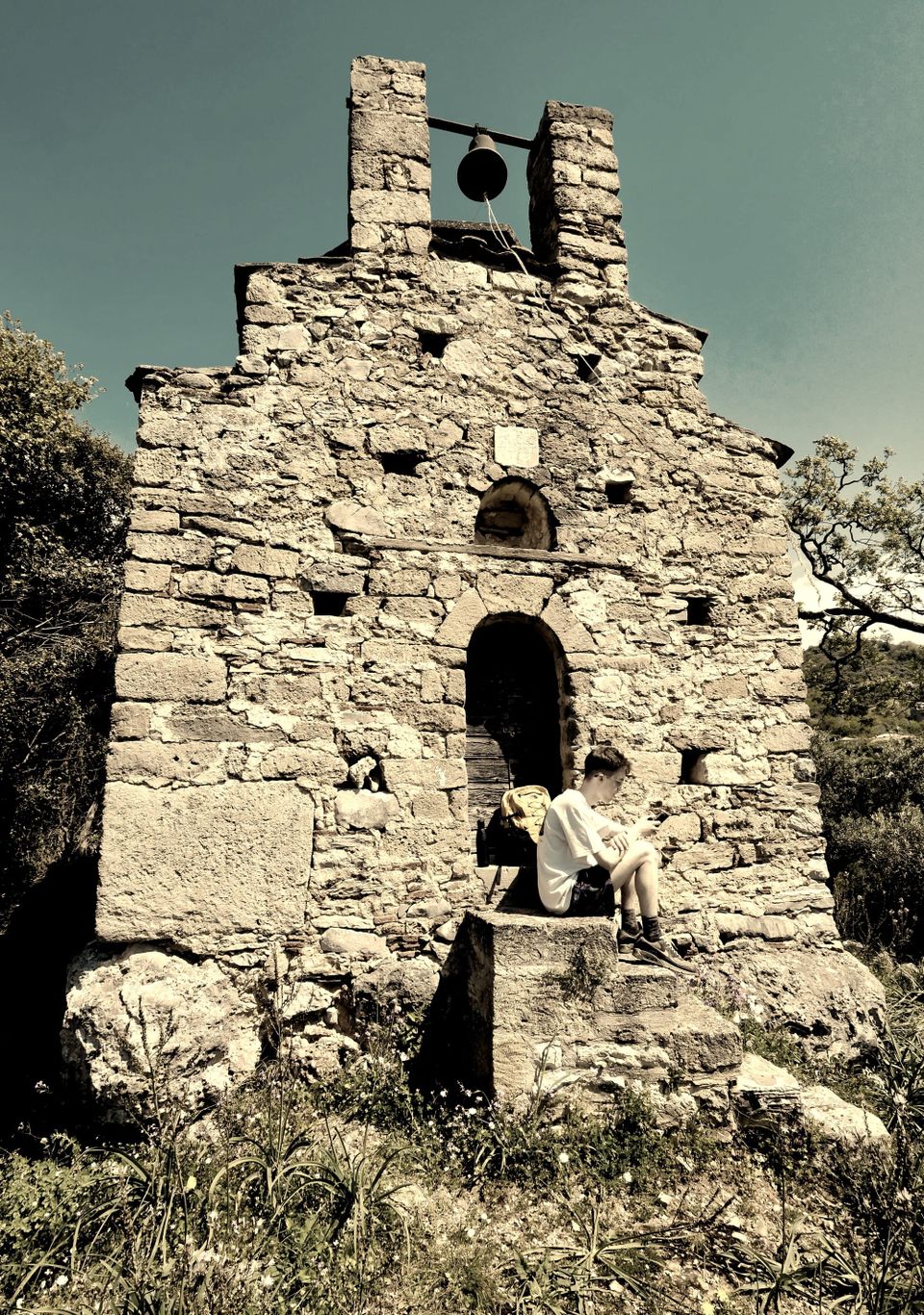
In April last year my son and my brother and I visited the little Byzantine chapel of Saint Nicolas in Chora above Kardamyli where, at around the time I was first reading The Songlines, they buried Bruce Chatwin's ashes.
Chatwin had been in Kardamyli to work on The Songlines. He stayed and wrote in a hotel a short walk from the house of his friend, the travel writer Patrick Leigh Fermor. Most afternoons, Chatwin and Leigh Fermor walked together.
God only knows what they talked about on their walks. Leigh Fermor was older, more worldly, with a prodigious memory and, to Chatwin, an enviable knowledge not only of languages (French, German, Greek, Rumanian) but of dialects of modern Greek descending to the nomadic tribes of the Macedonian uplands, the Vlachs and Sarakatsani; one of Leigh Fermor’s go-to stylistic tricks in his writing is to multiply an impossible list of peoples and sub-groups of peoples and languages and dialects, like a Byzantine librarian answering a simple query over (in some cases) two pages of unpronounceable names, providing the texture if not the substance of deep scholarship. And yet even Leigh Fermor was forced to acknowledge that Chatwin’s learning was notably arcane, thorough, fascinating. And that he was, above all else, a talker.
And so they walked, and talked. And most days, it seems, they ended up at the little chapel of St. Nicolas in Chora. Where Chatwin's remains would soon be buried.
...
Bruce Chatwin had been always walking towards his grave. Consciously or not. But then so are we all. We all have our significant places, where our loved ones might decided to scatter or inter our ashes. Not always a remote chapel, a mountain top, a cliff overlooking the sea, a bubbling spring, a romantic vista. It might just be a bit of woodland, a back garden, a corner of a park. The places are not places of epiphany, necessarily; more likely just sites to which people in life returned, or dwelt.
But perhaps after all we are drawn back because we know we will be buried, or dispersed, here. Our foreknowledge is self-fulfilling. We both pick up the signal and create the circuitry of our own post-life in the self-same act. The humming repetition. We return to the place and in returning, create the place where we will go back.
...
I am not about to speculate about the destination of my own ashes. I do not want to put ideas in my family’s head. But I think I prefer scatter to bury. I don’t want a mock-shrine. When D.H. Lawrence died in Vance in the mountains above the French Riviera in 1930, he was buried locally. But In 1935, on his wife Frieda’s instruction, her Italian lover, Angelo Ravagli, had Lawrence’s body exhumed and cremated. Frieda was by now back at the Kiowa ranch in New Mexico where she had lived with Lawrence in the early 1920s, and which was the only property they had ever owned (it had been paid for with the manuscript of Sons and Lovers). It was this that she intended as Lawrence’s final resting place.
Lawrence had intended to build a community of like-minded artists and free-spirits up here. He had been planning it since the First World War, had a notion it would be in Cornwall, or in Florida, then in New Mexico. He had a name for it – Rananim. Rananim was always further west. However, his relationship with his wife, Frieda, was so explosive, and he was himself so unhinged, that various friends and fellow artists over the years demurred. Katherine Mansfield and her husband John Middleton-Murry managed a few months in the Lawrences’ company on a hilltop near Land’s End, before escaping the rows and the atmosphere. In the winter of 1923 Lawrence, back temporarily from New Mexico, assembled his closest friends in an upper room in the Café Royal on Regent Street and insisted they follow him to back to the Kiowa Ranch, there to be finally free; but the supper descended into a farce of Judas kisses and declarations of love and portentous drunk speeches and smashed glasses, until Lawrence, having unwisely switched to port, finally put his head on the table and vomited, and had to be manhandled into a taxi and sent home.
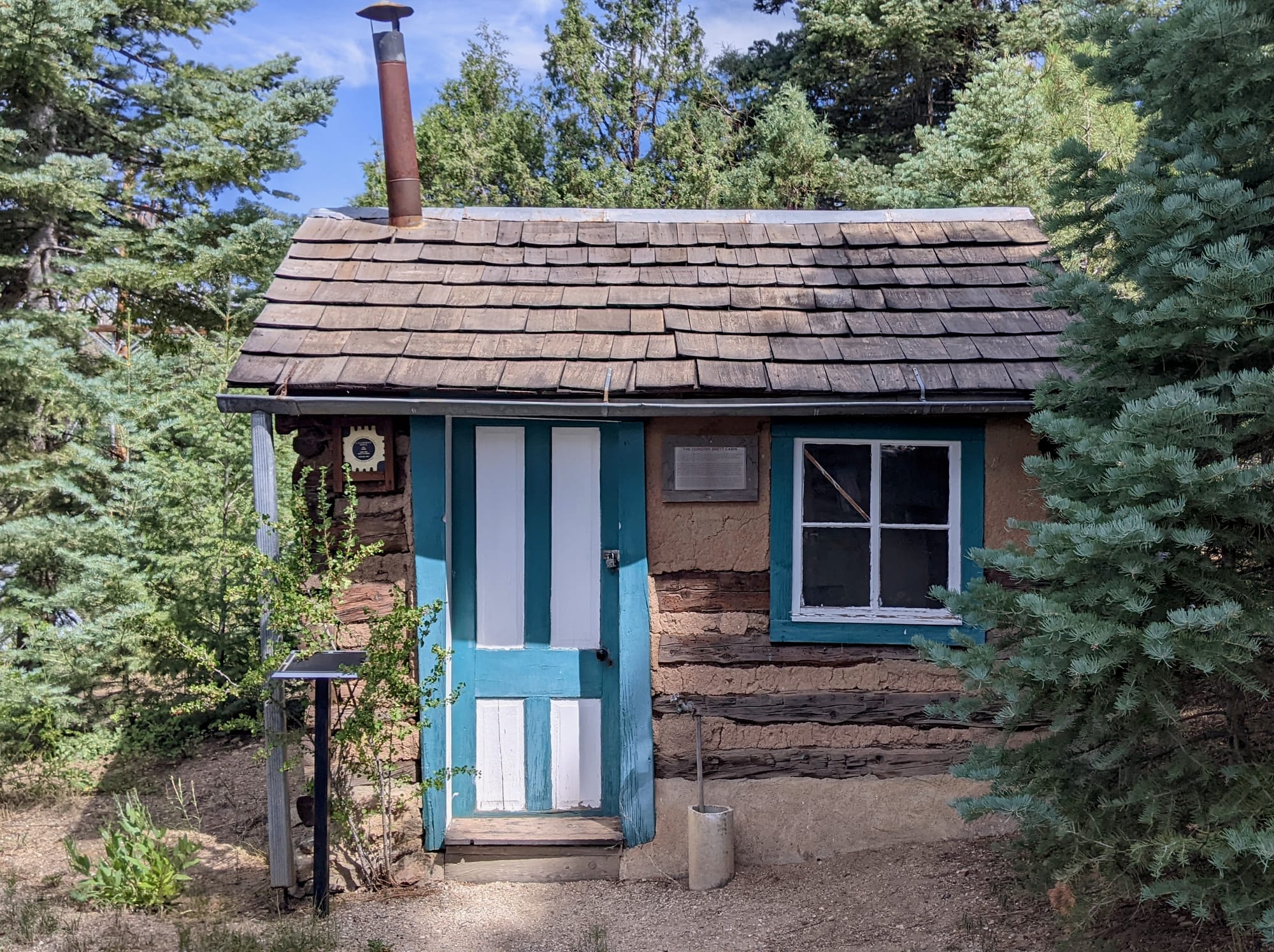
From that supper only one recruit emerged, an apologetic and aristocratic and almost totally deaf painter called Dorothy Brett, who liked to be known only as Brett. Brett lived on the Kiowa ranch in a tiny hutch-like cabin, where she typed Lawrence’s manuscripts, and painted. But Lawrence was always restless, and escaped to Mexico proper, where he was finally diagnosed with pulmonary tuberculosis. He returned to New Mexico only briefly, before heading back to Europe, and his own death. Brett, however, would spend the rest of her life there, in Taos (not on the ranch), as would Frieda.
...
My brother and I paid a visit to the ranch and the shrine when we were in New Mexico (or perhaps we were in New Mexico to pay a visit to the shrine and the ranch). We peered in the windows of the little wooden cabins where Lawrence and Freida and Brett had lived, and stroked the slender friendly orange cat who lives there now, and peered up at the tree which Giorgia O’Keefe had painted when she came here; and then took the zig-zaggy path up the hill to the white shrine where his ashes are buried.
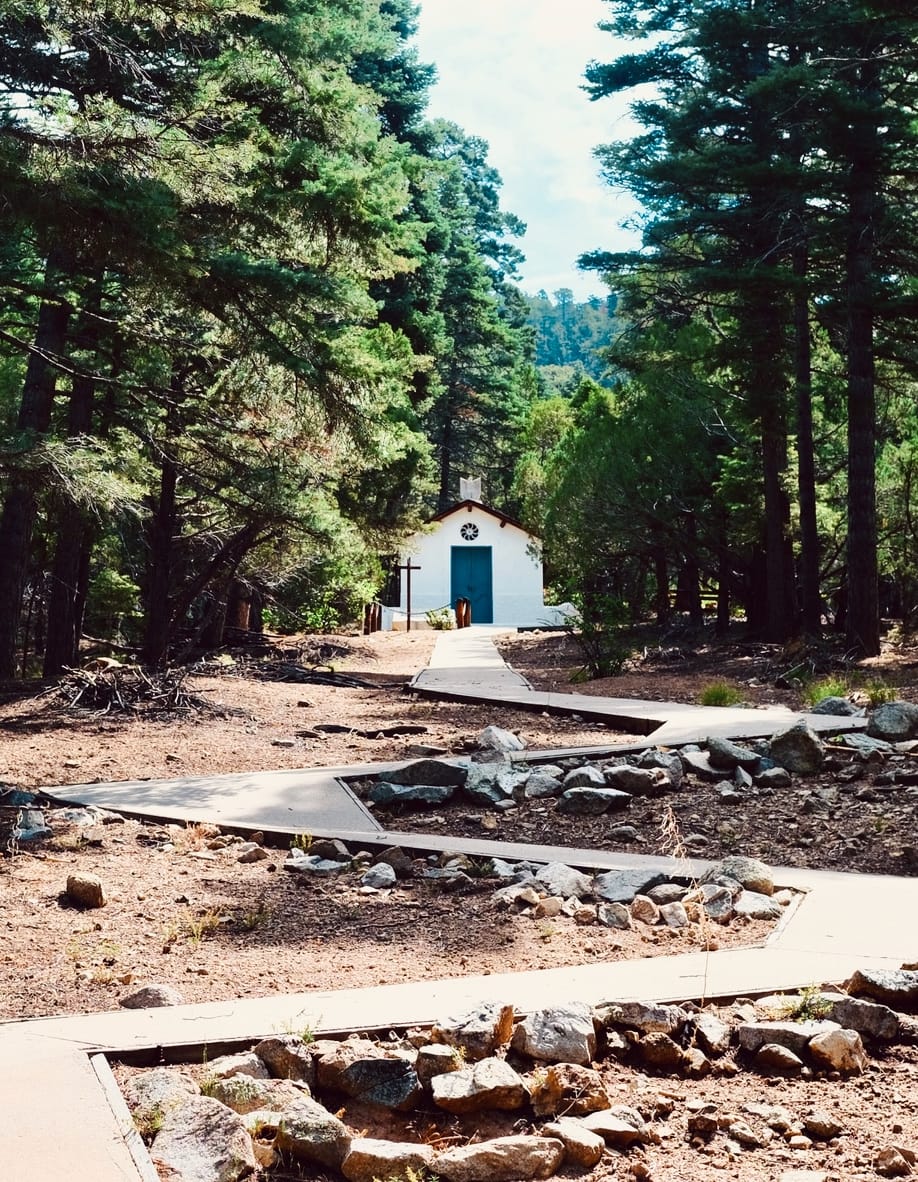
But they might not, after all, be his ashes. One version of the story has it that when Ravagli understood that he would be required to pay taxes to export Lawrence’s remains, he scattered them instead over the Mediterranean, and brought back an empty urn, which was then filled with earth and dust, and buried in concrete.
...
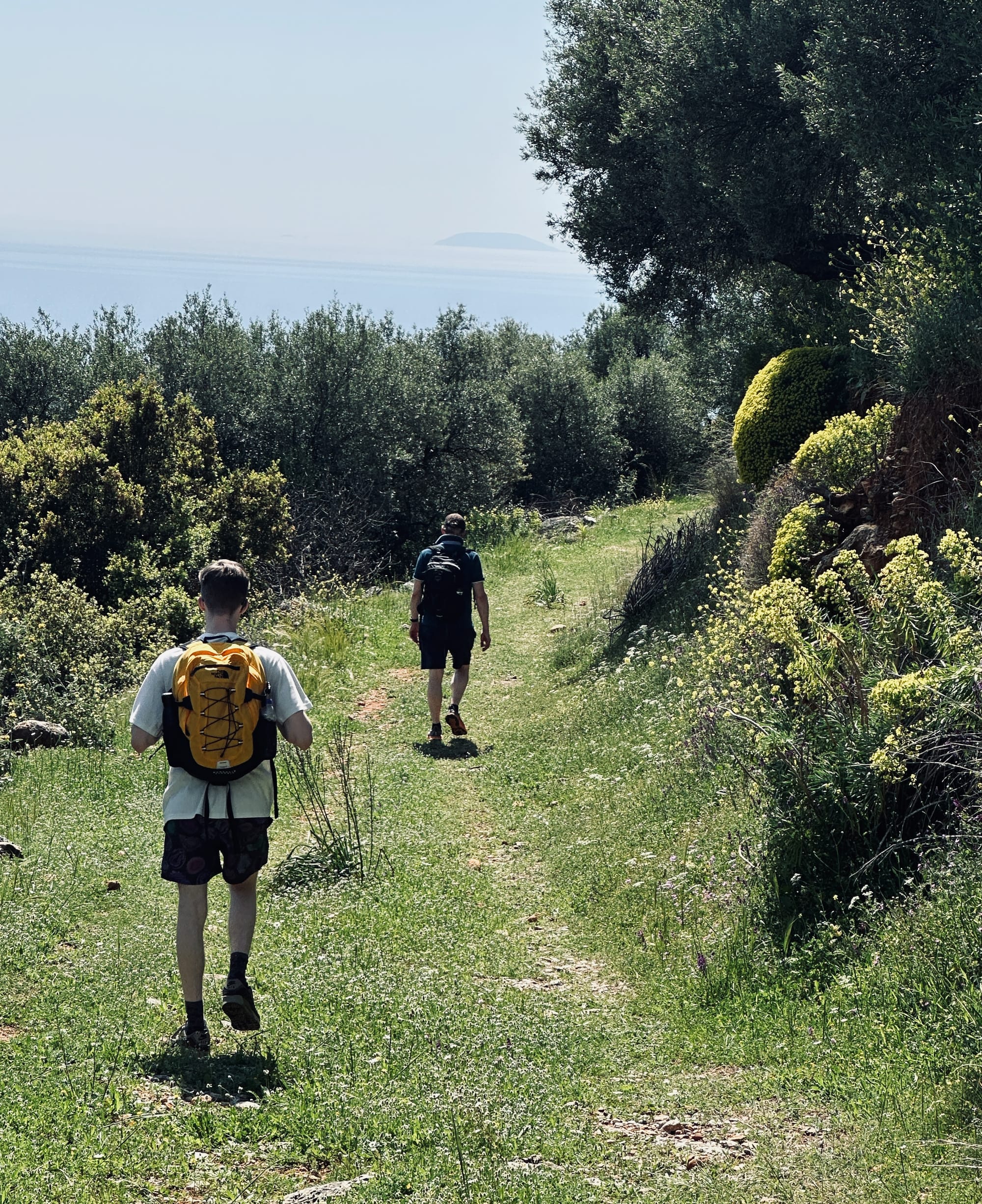
I am not given to pilgrimage and veneration. I just happen to be fond of walking, and reading. So it is, that from Kardamyli, my brother and my son and I walk up to Chatwin’s burial place.
It is an April afternoon of arching unbroken blue Greek skies, of primary-coloured hillside, great generous spatters of wild flower, yellow and scarlet.
The approach to the chapel, as the whole land hereabouts, is dominated by olive trees, gnarled ancient specimens; as we go, my son points out dragonflies and lizards, which I fail to spot; we see butterflies (a painted lady, fritillaries, tortoiseshell, blues); we walk in a blaze of yellow beneath the olive trees, to the front of the chapel, which overlooks a great spreading fig tree.
There is nothing to mark the spot of his burial, no final point of him. You can only float in the zone, like Burton and Speke looking for the source of the Nile. Close enough. There are bees buzzing on little purple flowers growing in a clump. Perhaps that is the place? But if I were Patrick Leigh Fermor (who must have wielded the spade, you feel), I would have chosen a spot aside from the path, under the hedge a little. Out of the way.
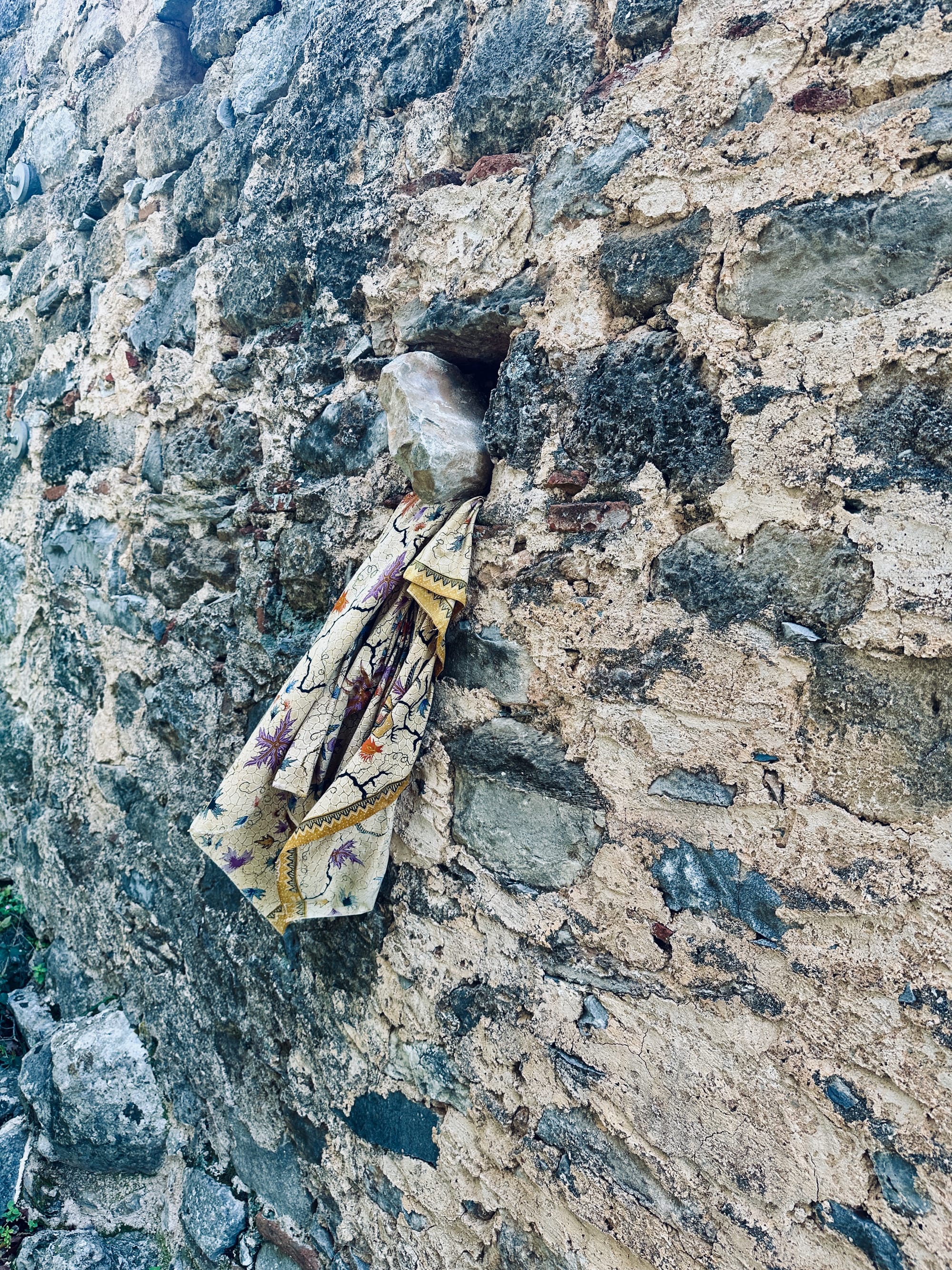
There is no protocol for such graveside visits. I have visited the graves or resting places of several of the writers I write about – Chatwin, D.H. Lawrence in New Mexico, Ezra Pound in Venice, George Mackay Brown on Orkney – and visitors and pilgrims seem to invent their own rituals. They leave stones, little messages wrapped up; here, someone has left a now-faded silk scarf in an indentation in the wall, a little gesture of departure, perhaps, like someone life standing on a train platform; but now just a trace, not of an emotion, but of a life structured by shared text and common gesture.
Apart from the scarf, I feel no presence except our own and am not, I repeat, given to hero worship: sainted remains have little power over me. But that leaves me at a loss. We sit around the bottom of the little chapel and eat our rolls. There is a bell hanging in a little belfry, and a rope makes it clang; my son has a go, and my brother.
I finally confess that I have brought one of my numerous slightly battered copies of The Songlines along with me; so I pull it out and read a couple of pages starting with my favourite passage – about Chatwin settling at his desk in the outback, stacking his notebooks, settling to his work – but silently, in my head, to myself.
He is not here after all; he is only hereabouts. Unlocalisable. Etherealised beyond belief. But you never know. And so, our lunch and minor obsequies done, we turn our faces back to the little town by the sea, and the sea itself, and the endless living world beyond.
Member discussion