Cross
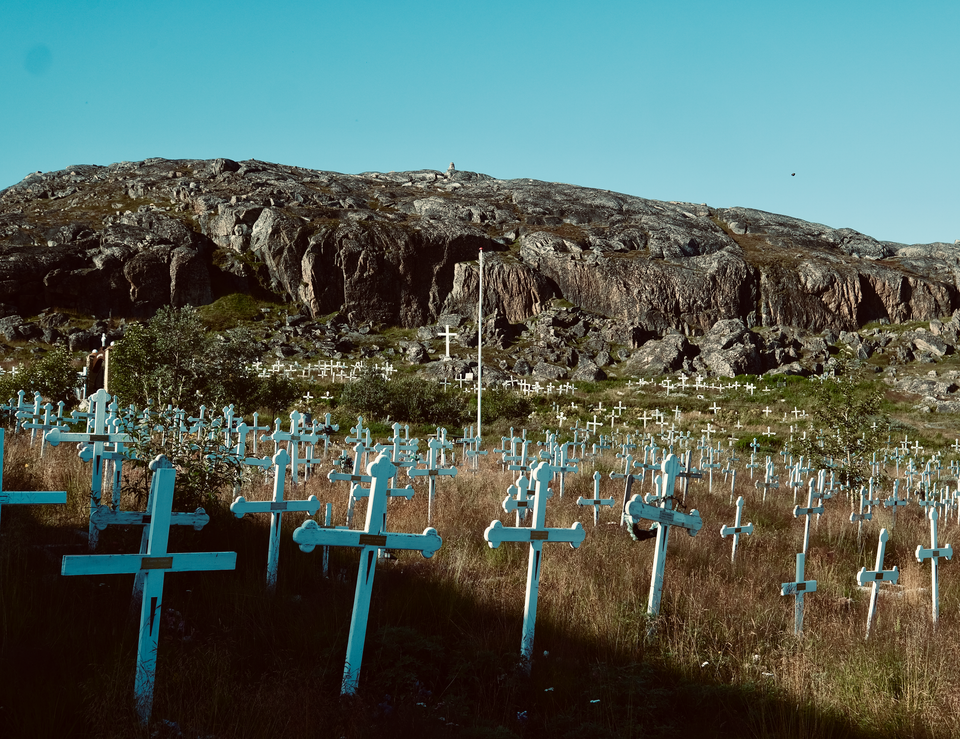
I have some time on my hands in Qaqortoq in Greenland, so I walk up to the little cemetery. Or not so little, for a town of this size. It is spilling up the hillside, a spray of simple, self-similar white crosses, as though the Lutherans had taught the Inuit that death, like life, was nothing more than a replication in which we all participate. This is how we mark your passing, another white cross in the stubborn litany of white crosses inscribed on the bare hillside like the etched, crossed lines of a prisoner marking the days to release. Congratulations. You have done your time.
Little is known of Greenlandic Inuit burial practices in the three hundred or so years between the departure of the Greenlandic Norse in the middle of the fifteenth century and the advent of the Lutheran Danes in the 1720s. In parts of Canada, Inuit had been observed confiding the bodies of the dead to the sea ice as it broke up; the absence of burial sites for much of the period suggests Greenlandic Inuit had also buried their dead in sea and ice. These were nomadic people, still learning the shape, the migration paths, the weather systems of what was to them a fairly new land. Significant places and the patterns of movement between them crystallise only slowly.
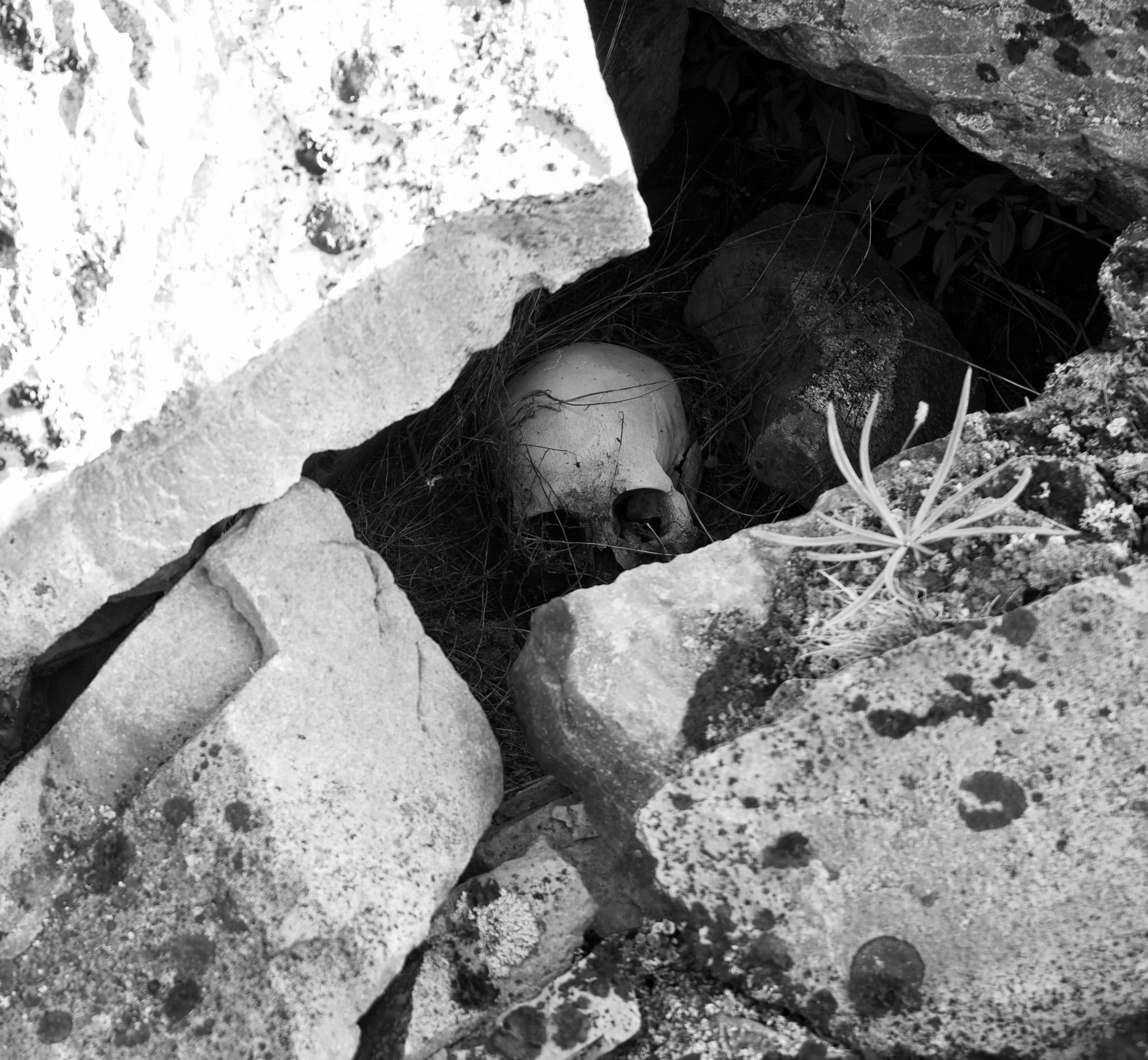
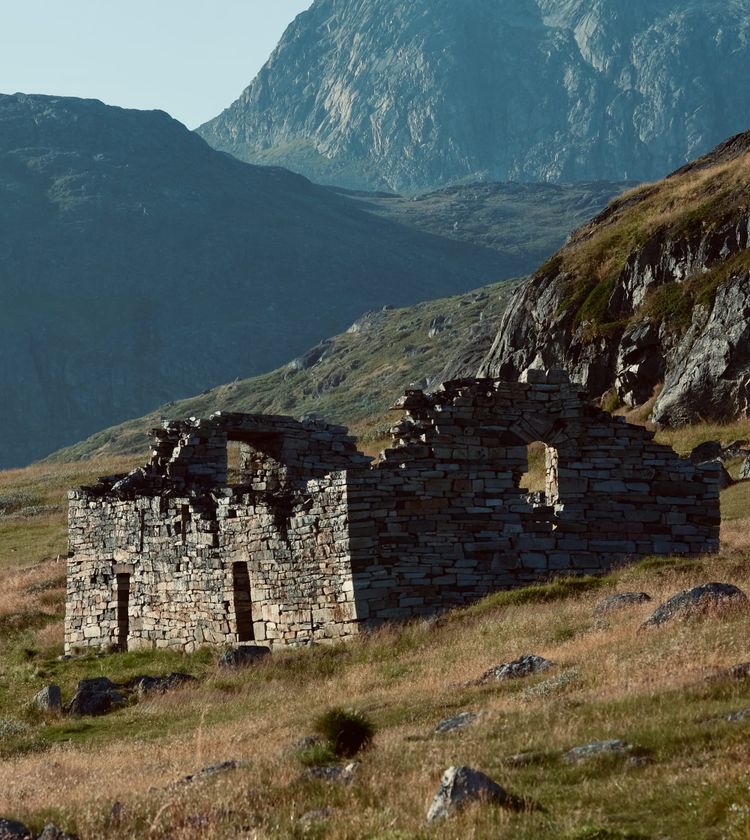
But in time cairns were built, and the dead laid beneath them with grave goods. A cairn is a logical response to the hardness of the ground for much of the year. Above Igaliku, as I have mentioned elsewhere, the hillside is a large and natural burial place for the Greenlandic Norse. Some two thousand bodies are estimated to have been interred here. Some still peer up at you from their piles of stones.
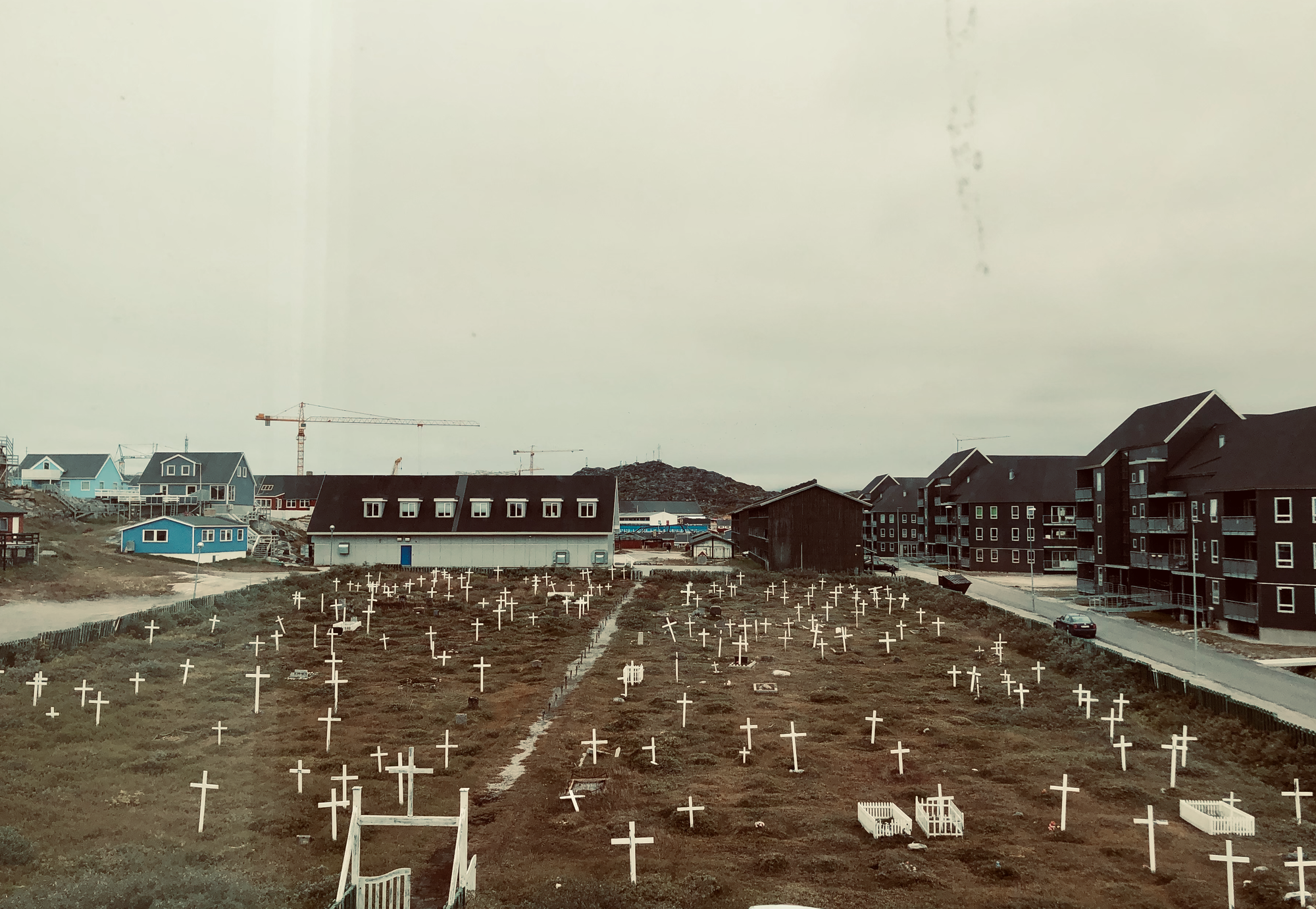
The white crosses at Qaqortoq are a repetition in another way. My first night in Greenland, in Nuuk, I spent in a hotel opposite the cemetery.
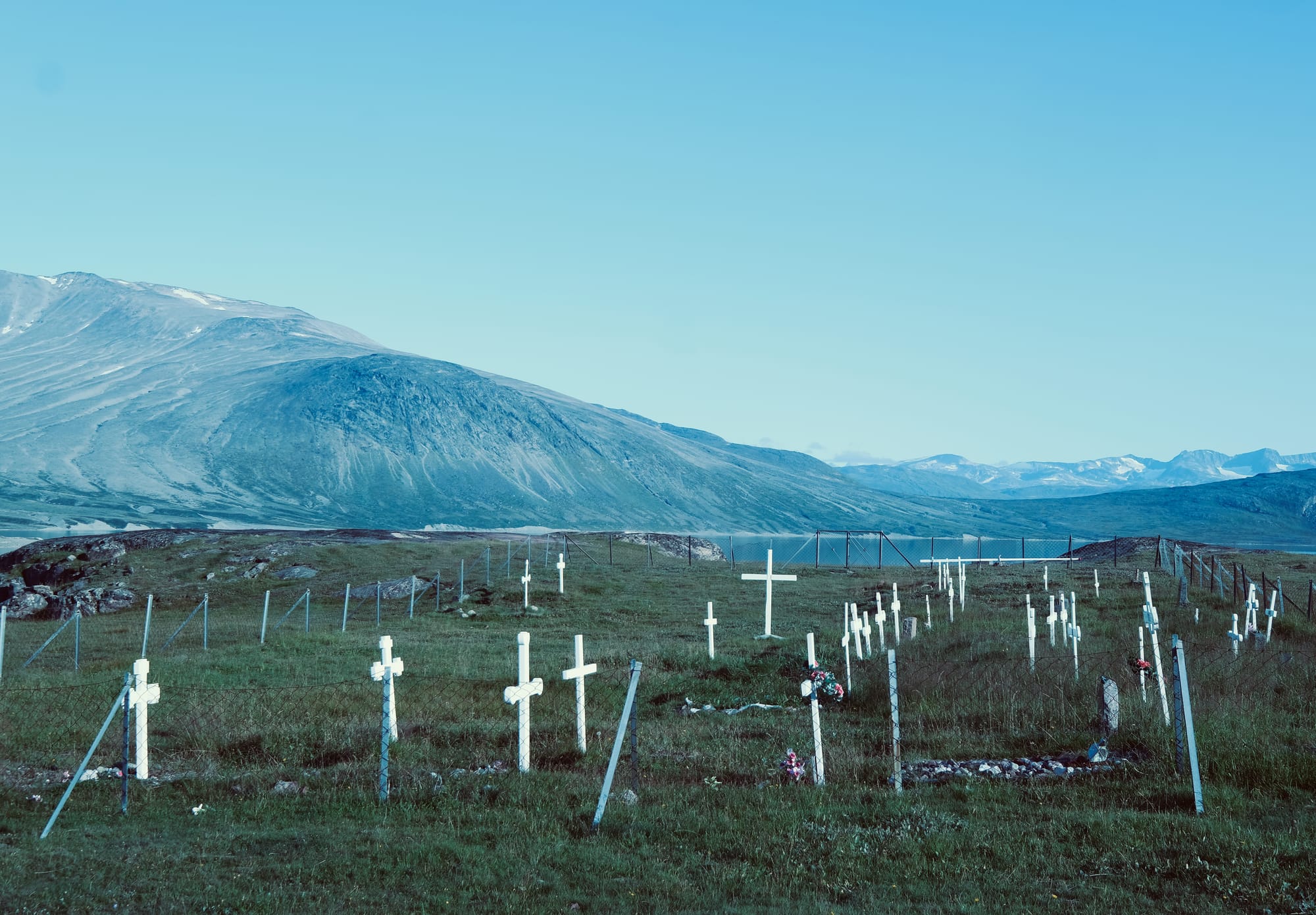
And lower down the hillside in Igaliku there are the familiar crosses again, like a statistical or Cabalistic search for the one true cross, a shuffling of angles and materials in combinations and recombinations, as though one of these crosses might spring the lock of limbo for us all, release us for good and glory. We keep on trying.
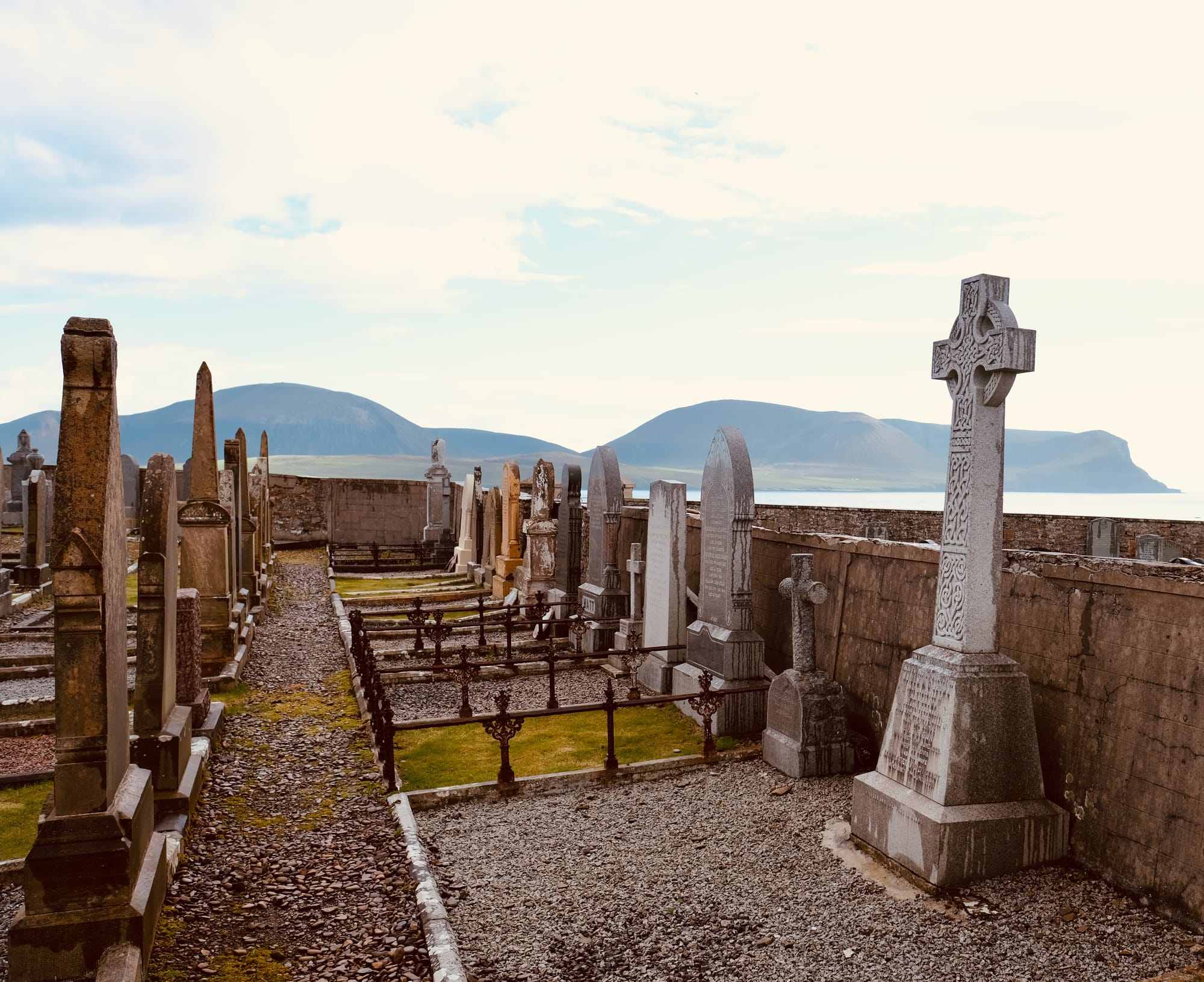
Elsewhere in these northern islands and archipelagos the cemeteries are more familiar jumbles of headstones and Celtic crosses and memorials with inscriptions. Walled, dignified, but a bit messy, more basement or attic lumber room of the spirit (depending on your theology) than focussed, logical, monomaniacal pursuit of an idea of death.
And more recently still, we have come to understand and increasingly, in our burial practices, to demonstrate that death is not the entering another name in the lists of eternity, but an entropic process. My father was memorialised for a while with a rose in the municipal gardens around the crematorium in Cambridge, which they fertilise with the ashes of the dead. I do not know if they fertilised my father’s rose with his own ashes, but I doubt it, since, for example, we were only allowed to choose the colour of the rose, not the variety; and when the little plaque marking his rose went missing after a couple of years (kicked over, perhaps, by a gardener, pulled out and tossed aside by a small child or raving mourner), and we sought to have it replaced, we were only ushered into the eternal waiting room of desultory, entropic, bureaucratic correspondence; in the end the energy simply trickled out of us, and we let his spirit disperse.
He would have found it amusing at some level. He didn’t even bother to plant a rose for his own father, who, a tiny wisp of a man, simply disappeared from our lives one day, up a crematorium chimney.
My mother’s rose is in our garden. We know which one it is, and which variety (Fighting Temeraire – she could be a truculent presence). But at some point we will move house, move on, leave her to ghost over the gardens of Cambridge in search of my father’s nomadic spirit.
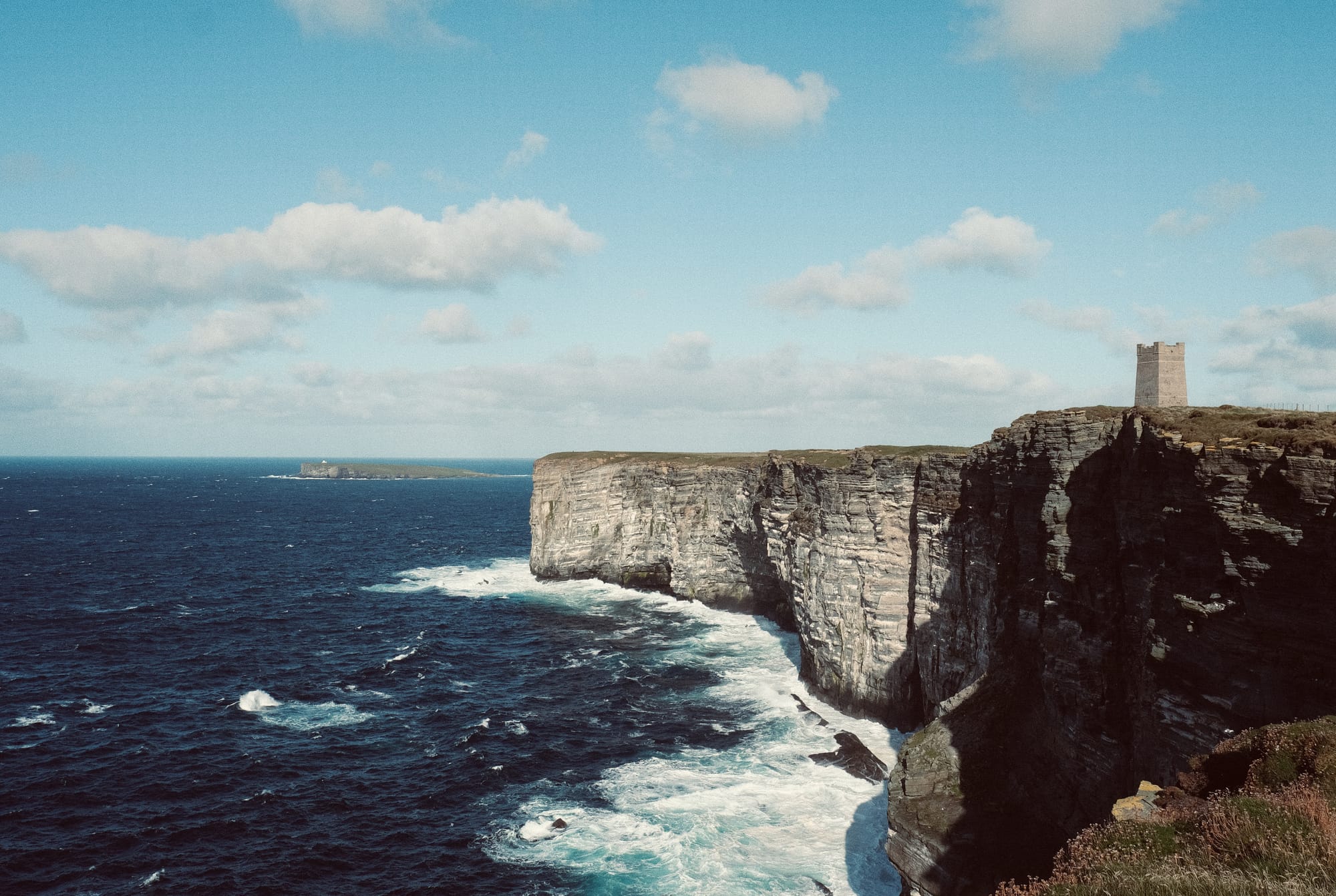
There are other, still purer, possibilities. In 1916 Field Marshall Herbert Kitchener took ship in the HMS Hampshire for Russia, on a diplomatic mission. But the ship struck a mine and sank in the night a mile off Marwick Head in Orkney with the loss of 737 hands, including the Field Marshall.
There were twelve survivors.
I recall reading or hearing someone somewhere (accurate references, like inscriptions on a gravestone, would be beside the point) outline a thought experiment: if you went down to the edge of the sea and dipped in a glass and filled it with seawater; and if you then took that glass of seawater and docketed each of its molecules of water (or individual atoms, I do not recall which), and then returned to the sea and threw the glass of water back in and allowed its constituent molecules to disperse evenly through all of the seas and oceans of the earth; and then, final step, if you went once again down to the sea and took out a new glass of water, you would almost certain find within it some of your original atoms (or molecules); which is as much as to say, there are are more atoms in a glass of water than there are glasses of water in all the seas and oceans of the earth.
And so that leads us to a further conclusion: you would almost certainly find, in your glass of water, some constituent part of General Kitchener, as, indeed, of each of his shipmates. Dispersed, disorganised, information-free.
Except that, on the hillside above Marwick, they have set up a colossal stone memorial to the men lost. Just in case.
Member discussion