Settlement patterns
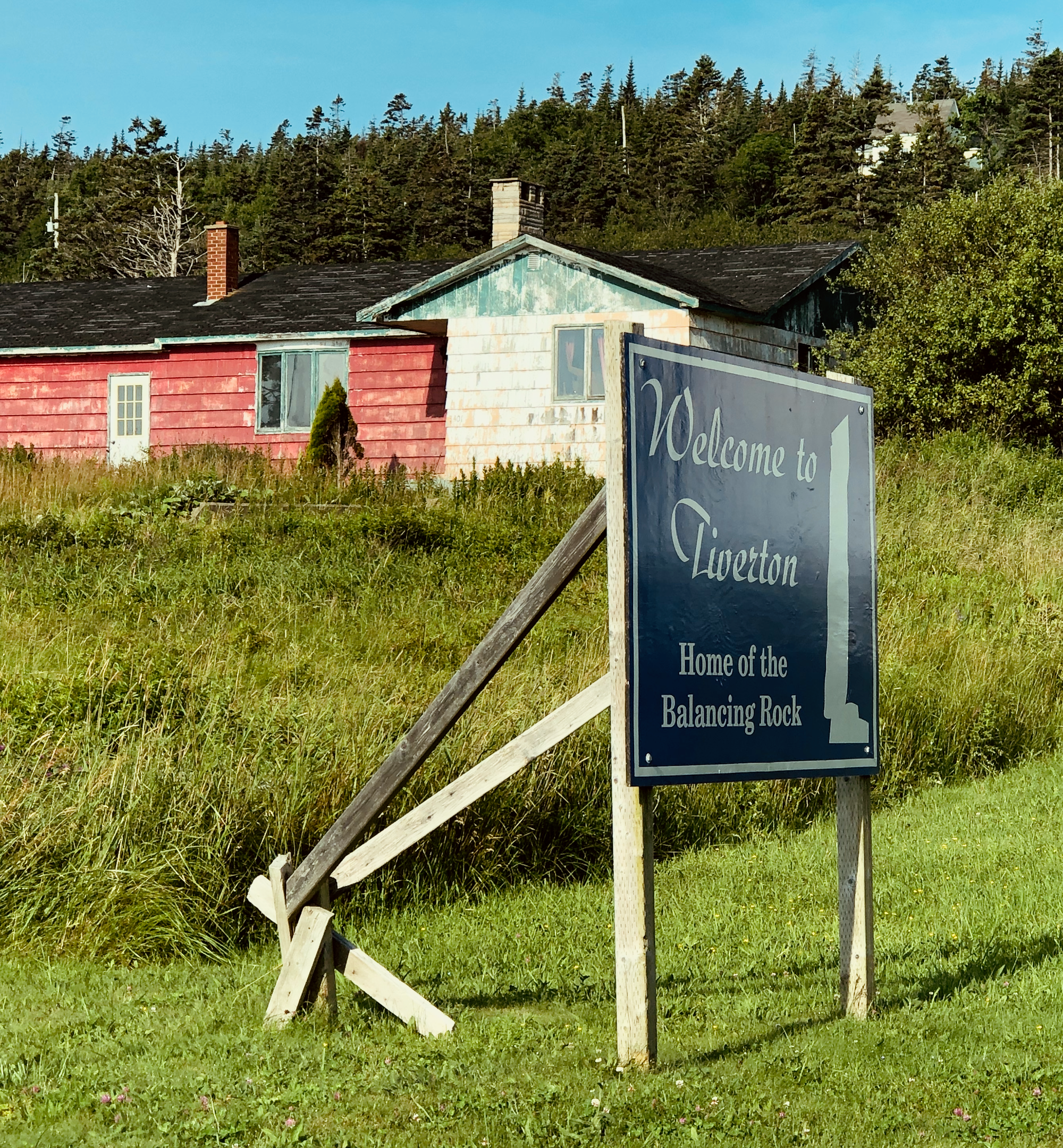
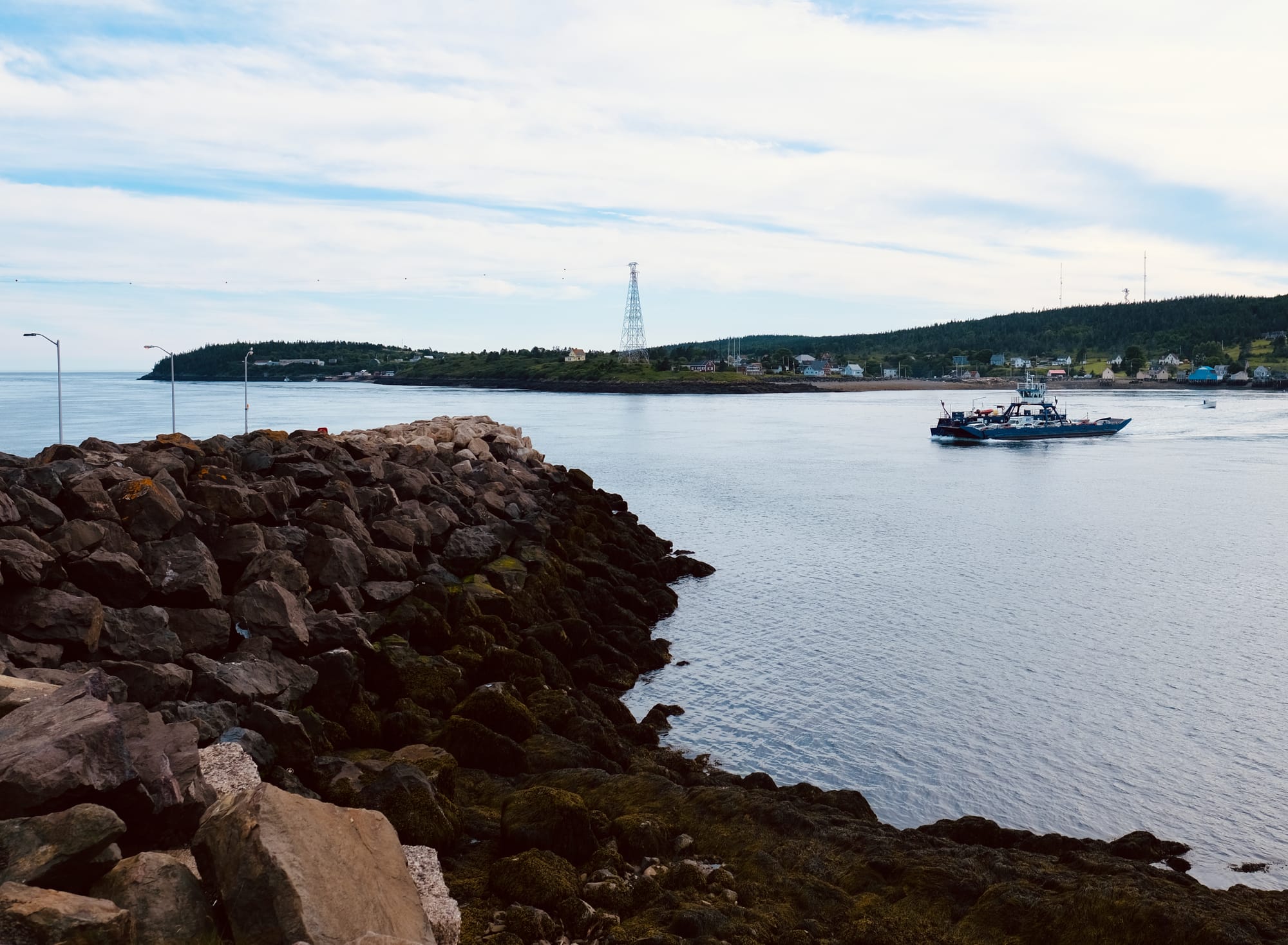
On the north-west coast of Nova Scotia, on one of the islands just off the peninsula of Digby Neck on the Bay of Fundy, there is a small village called Tiverton, named for the town of Tiverton in Devon. Tiverton is where the ferry which connects Long Island with Digby Neck comes in, and goes out.
Tiverton is also the home of the balancing rock.
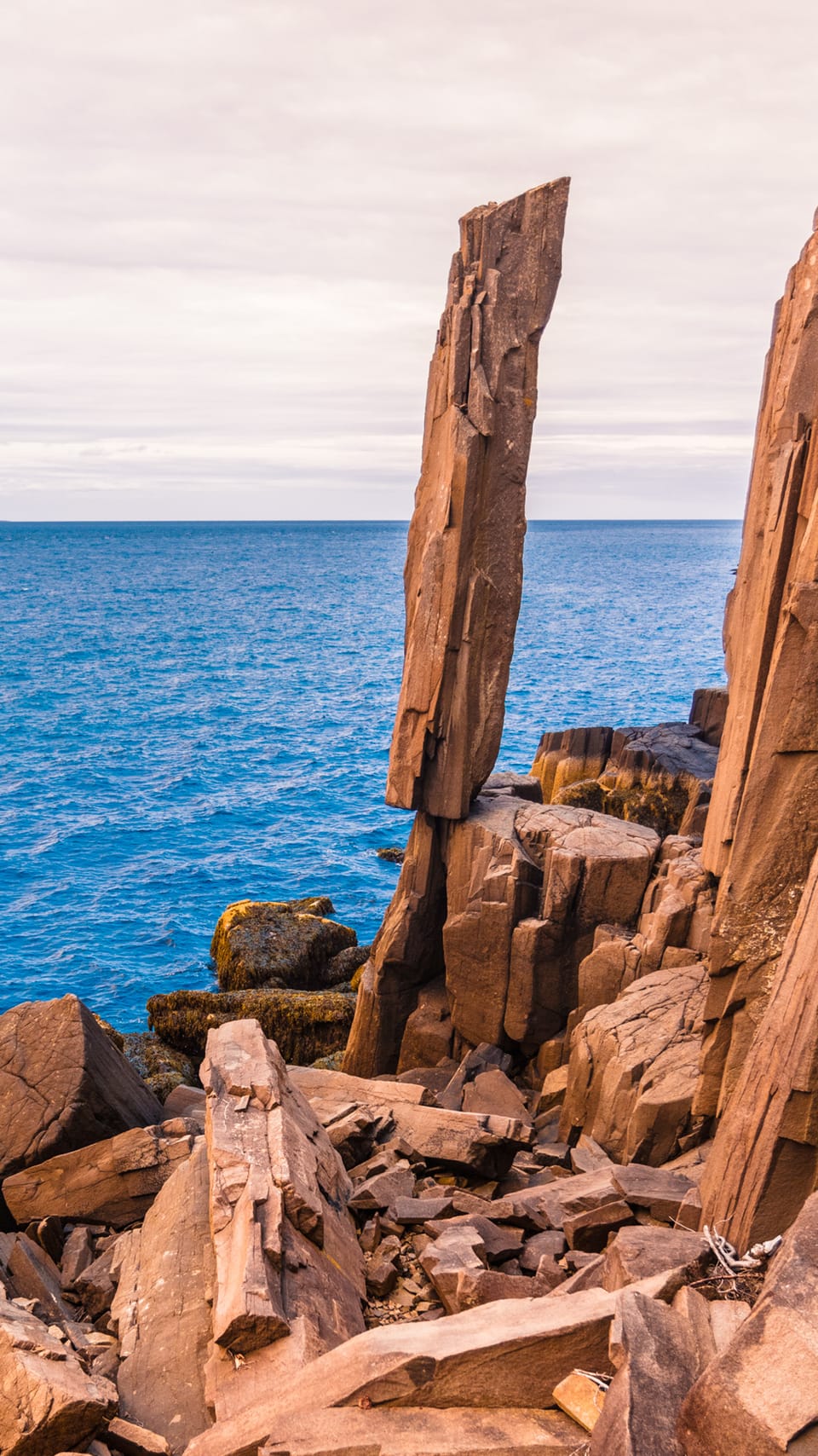
The balancing rock is a singular basalt column which stands on the shoreline, apparently precarious. It is a tourist draw, of sorts. People trek down the mile or so to get pictures, perhaps if their ferry is cancelled, or delayed. Our ferry is neither cancelled nor delayed, and my brother and I have a long drive the length of Nova Scotia ahead of us, so we do not get out to look. Some experiences in life you just have to pass right on by.
...
When I was at school they divided geography into three sub-disciplines: physical geography, applied geography, and human geography. Perhaps they still do, or perhaps the world has moved on. Either way, at my school, we had a teacher for each. Mr Blake, who taught physical geography, was a rugby player whose legs had been crushed in a car accident and, while in the end he worked his way back to some mobility, he remained always stiff-legged and never smiled again. He was gruff, unyielding like the basalt rock formations he talked so much about, wrote longhand notes on the board which we were to copy, and at least once arrived at the lesson smelling of brandy and proceeded to slur his way through a page or two of the text book. I liked him. And I liked physical geography, coasts and rivers and permafrost and tectonics.
Mr Morley, who taught Applied Geography, was young and surly and sarcastic and treated us all as if we were idiots. He had done his fieldwork at university in Nigeria, and had some choice things to say about an unvarying diet of yams. He told me with a sneer that I didn’t know much about geography but would probably do all right in my exams because I could write good prose. He seemed, quite reasonably, unimpressed by this fact. But I liked him too. We wrote questionnaires and learnt mapping techniques and how to measure river flow and track land use.
Mr Lewis – Human Geography – was a young father, mild-mannered, slightly ineffectual, but agreeable. Everybody called him Mick. And everybody liked him. I liked him. But I hated Human Geography. It seemed to be mostly about models of human behaviour; it demonstrated tediously how cities and towns developed as radial patterns with linear spokes (railways, roads) distributed evenly over a featureless land in varying size and concentration. This growth and development of settlements seemed disturbed, almost irritable, in the face of actual geography: basalt coastlines, for example, or sinuous rivers. These things distorted the pattern. And so we sat bleary-eyed and tried to relate these diagrams and patterns to case studies of far off places we would never see: Freetown, Sierra Leone; Lagos.
The textbook we used was called Settlement Patterns. It had a blue cover and fragments of hexagonal or radial diagrams on it. The school owned a hundred tatty copies, which they handed out every year, to get tattier. It made me weary just to look at it on my desk.
I recently hunted down a copy, and now find it rather energising than otherwise.

Which young man or woman is interested in the slow growth of towns? The evidence of human sedentism, the slowing, cooling, corrupting? Not me. I looked out over the fields beyond my classroom window and dreamed of just walking out across them, not coming back. Adventure. Fieldwork. Transformation. Settlement was a cooling, a drawing inward to the place where my parents lived (in my young imagination) their cold and limited existence; my energy was all volcanic, centripetal. To settle, from a certain perspective (the perspective of youth), is to give up the world.
But in time, of course, the patterns drew me in. Did I come to see that settlement is a rich, complex, trans-generational pattern which harbours possibilities of focus, close attention, continuity, and not merely a state of bourgeois collapse? Or did I simply run out of energy like everyone else and accommodate myself to that fact, rationalise my settlement as I waited, like that basalt column, to topple ungainly into the cold sea?
A bit of both, perhaps.
...
The prose which Mr. Morley regarded as glib and superficial resolved itself over time (it pleases me to think) into an observational tool in its own right. Just as a geography textbook should value clarity and organisation, so I came to want to write books filled with clear and meaningful concepts, as a city is filled with numbered houses and roads with names and signposts; but when I ventured out over my subjects, over, in this case, the islands and continents of the North Atlantic, I encountered a resistance in the material remnants of the cities I proposed to study. Those diagrams and charts manifested, on the ground, as some strange places, just as those simple physical forces manifested as some notable columns of rock, columns you might walk a mile or two to see (but not much more than a mile or two).
In the process, perhaps, they became more interesting. Not hexagons or targets on a blue field, but actual places, distorted, malformed, abandoned, revisited. Settlements turn out to be complex, and settlement patterns arcane. Because, it should be obvious, settlements are outgrowths of, and in consequence representations of, our own messy conflicted psyche, interacting with coasts, with sinuous rivers, with actual recalcitrant lands and with other people. Human geography. Applied geography.
...
Of the village of Tiverton, I have little to say. It is home to three hundred souls, a couple of long roads of clapboard houses leading to the ferry. On one side of it is the whale-rich Bay of Fundy, on the other St. Mary's Bay. It's inhabitants catch lobster, run whale-cruises. Most folk just pass through, stopping for a few minutes on the jetty where the ferry comes in. You park you car and walk off to see if you can get a coffee, or just to stretch your legs. You look out over the little channel which separates you from Digby Neck and the mainland, the beginning of the vastness of Canada. Not far from where you stand there are whales, and eagles; but here, people just wait, cooling their heals. Tending to their lobster creels. Waiting for the ferry.
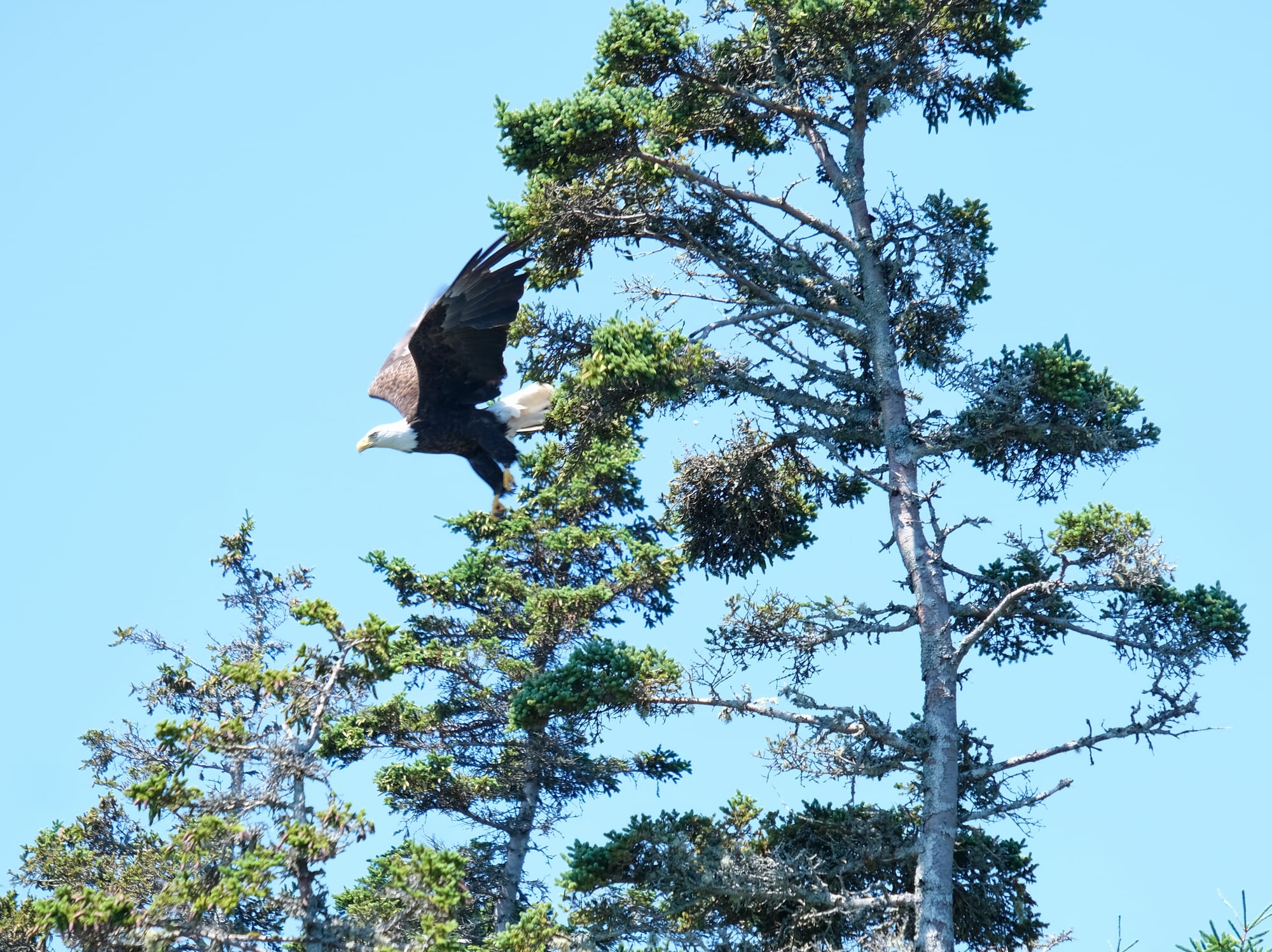
The whole of Digby Neck, and Long Island and little Brier Island beyond, are essentially long-cooled lava flows. Hence the basalt. That rock you drove past is, in the grand scheme of things, not so singular. Basalt has a way of cooling, and the sea a way of eroding, which can make a Giant's Causeway or a Fingal's Cave, or a balancing rock. These things are thinkable patterns, in the basalt-coastline space of possible forms, just as bald eagles are thinkable in the raptor space of possible forms.
The cooling of the earth, you might conclude, throws up strange but predictable patterns of behaviour in its rocks. Just as the settling of the human race has thrown up multitudes of singular, but predictable, settlements. Like this one. Settlements which shouldn't exist, but clearly do.
And the column is not as precarious as it looks. Evidently some years ago a group of drunk fishermen attempted to pull it down, and failed.

Member discussion