Hvalsey
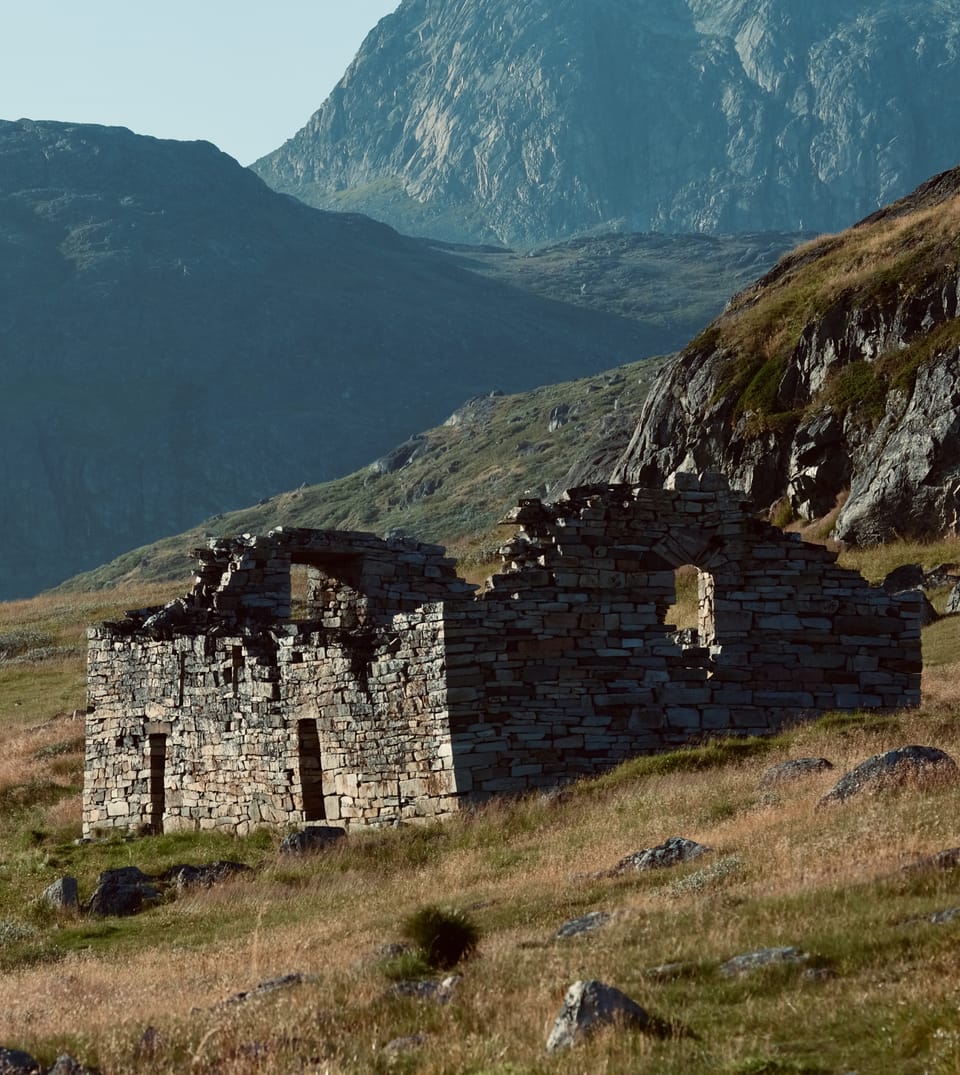
If you want to travel to the edge of the world, you can. The edge of the world is in Greenland, at a place called Hvalsey. At Hvalsey, the roads have long since run out; all around you, the world is breaking apart into great dignified fragments of ice which drift down the blue-green fjord and away.
If you want to travel to the edge of time, you can do that too. The edge of time is also at a place called Hvalsey. One of its edges anyway. This is where the time of the Norse in Greenland ran out. History, that invention of the written word, stopped, for a few centuries. For a few centuries there were just people out of time but going about their business, clinging to the edge of the world as it broke up around them.
But here is the unsurprising thing: when you arrive at the edge of the world and the edge of time you will find there (and then) a stone chapel. It is nothing less than you would expect. A great empty landscape with a solitary chapel standing in it.
Something is going to happen. Perhaps your bones will shortly whiten the hillside here, warding off other pretenders; or you will complete your quest, walk out of the chapel with the answer to a question you did not want answered, an answer which throws you back into the world of the living, battered and unenlightened, but changed.
...
I travelled to Greenland expressly to see the ruined church on the island of Hvalsey, some miles up the fjord from Qaqortoq, and ask of it a question. The church was a little over a century old when the last of the Norse, under pressure from their Inuit neighbours (actually, the pre-cursors of the Inuit, the so-called Thule peoples) and a cooling climate, and faced with changes to the luxury markets in medieval Europe which saw the demand for walrus and narwhal ivory diminish, abandoned Greenland.
If there were more remote settlements in the world, more anciently abandoned inhabitations (and there were) then Hvalsey through the sheer improbability of its existence and survival might just as well stand for all them, a fragment lodged in an eddy of time on the remote outer orbit of the maps of settleable space.
I had sat and looked at the map, and wondered how anyone got there. I subsequently found that the Disko Line – the boat company which runs red-and-white shuttles between the settlements of southern Greenland – could arrange a tour to Hvalsey from Qaqortoq, and so, after two pandemic-postponed trips –trips routed via Iceland and Nuuk and Narsarsuaq to Qaqortoq – after much expense and multiple PCR tests and friable connections and the stress of variable weather and invariable bureaucracy, I was finally here.
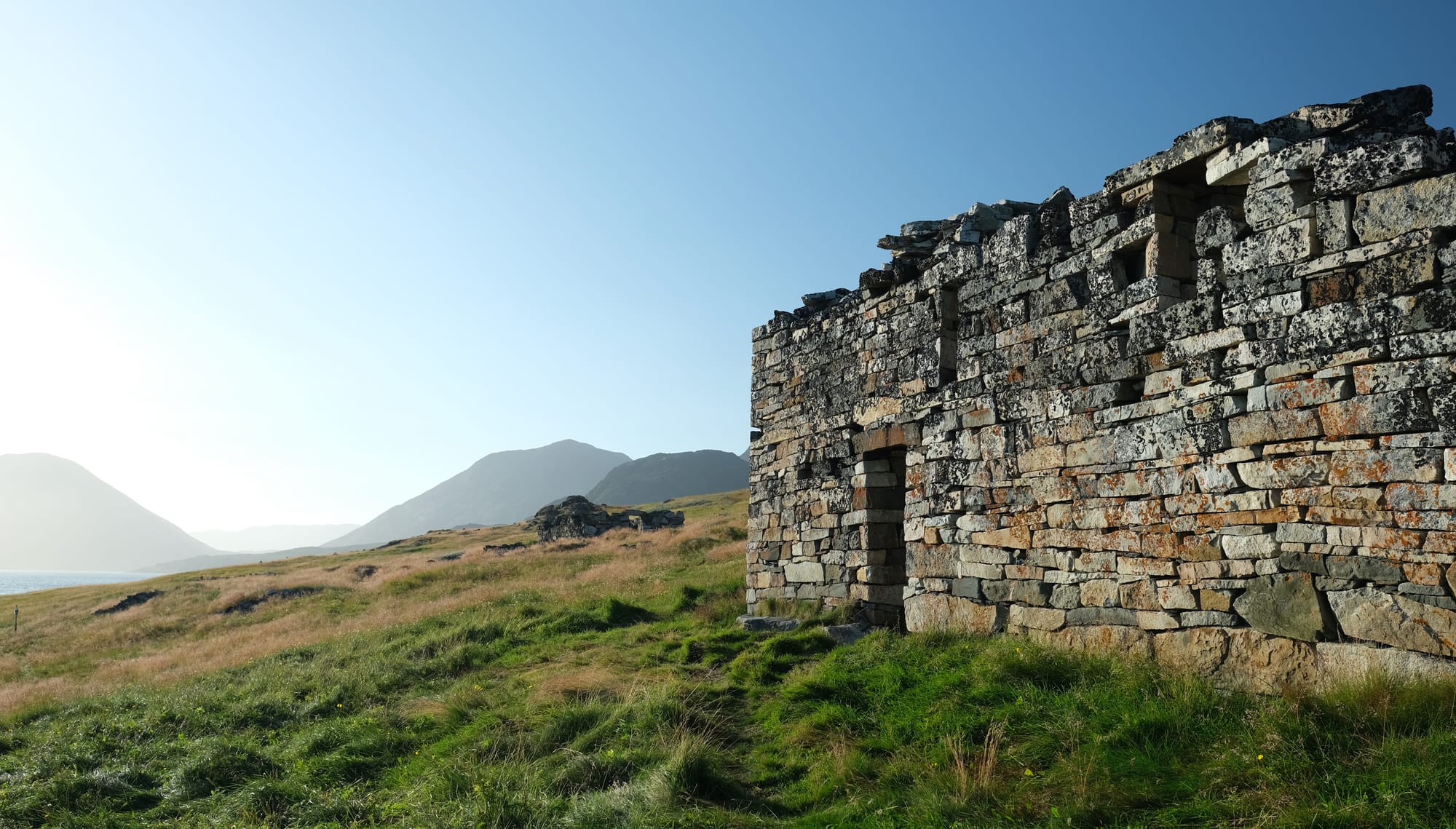
And so on the evening before my little dance I had been over to Hvalsey, on a boat of the Disko Line. I was the only passenger. The wordless skipper dropped me at the little jetty on the deserted island and smoked cigarettes for an hour while I walked up to the church where it sits solitary on the littoral between the forbidding humps of the hills rising behind it, and the fjord.
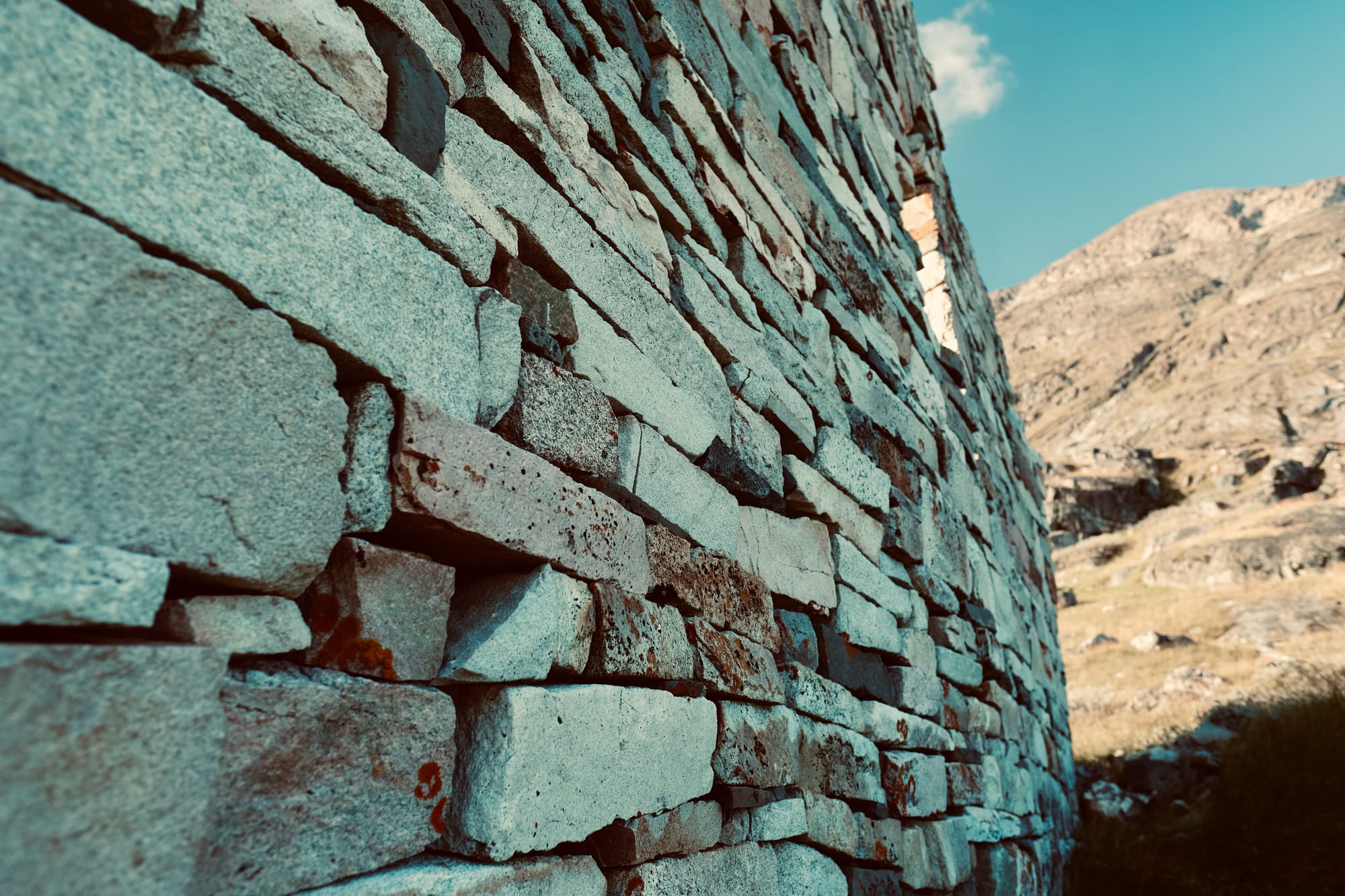
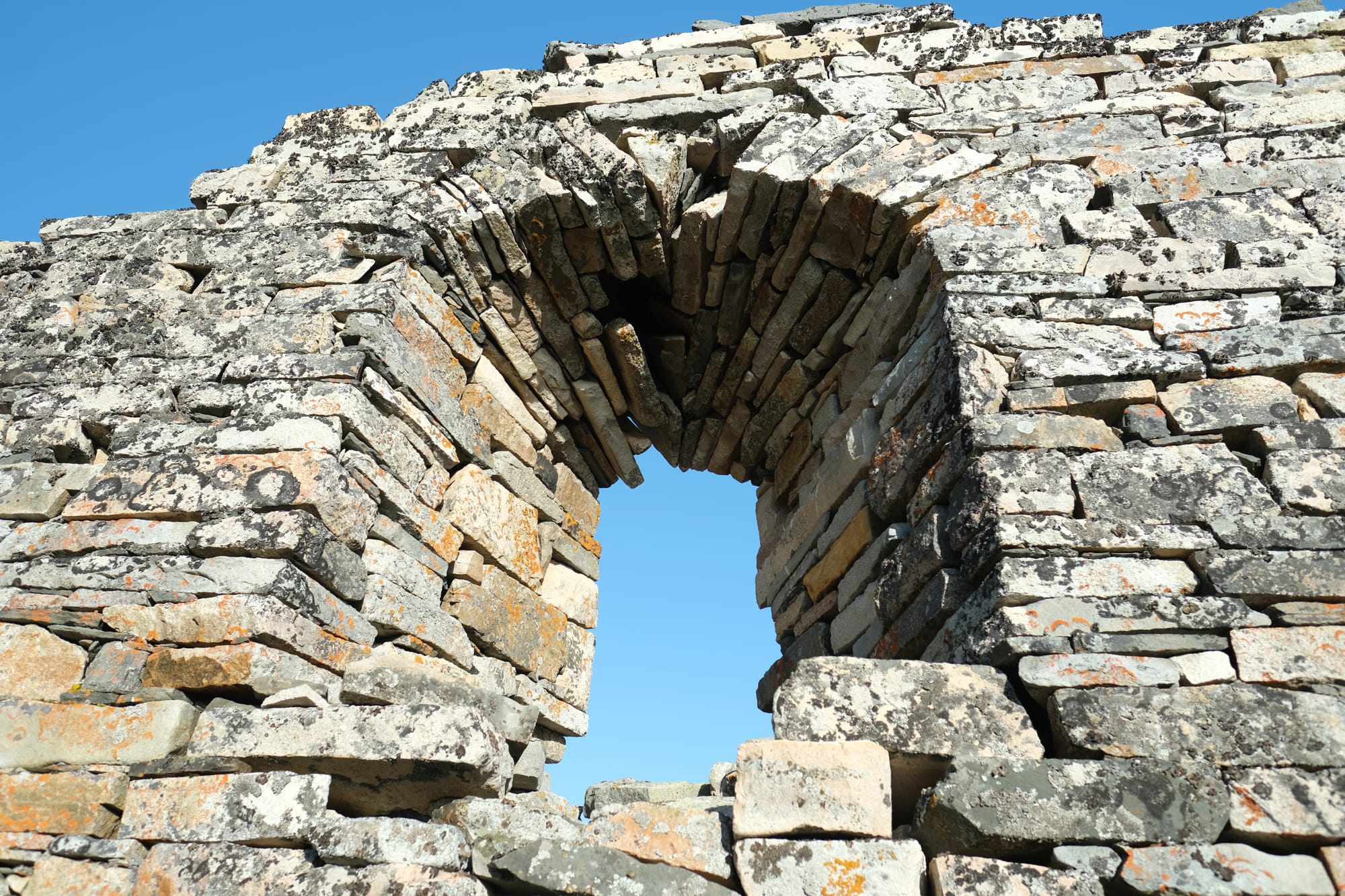
The church is more massive, more substantial than you think, from photographs. It was built over an existing graveyard, and subsidence in the grave-pocked land in the centuries since has caused it to sag at the corners. But it still stands, better preserved than any other Greenlandic Norse structure. The stones in its walls – dressed granite fieldstones – are large – some are estimated to weigh up to five tonnes – and neatly fitted. They would once have been covered with a plaster or mortar made with crushed shells which would have rendered its exterior a limestone yellowish-white – the name of the local settlement Qaqortoq, means ‘White Place’.
There is a light breeze, this evening. It has been warm these last few days. The weather is about to change, but for now, the tufts of grass which surround the building sway gently, in the yellow light. The old church dances internally, a skittish dance, as though it were the newest thing under the sun, delighting in its grain and its solidity.
Someone’s god still dwells here.
...
The church was constructed around the beginning of the fourteenth century, and abandoned a little over a century later. Everyone was gone by the middle of the fifteenth century, more or less.
And it is from Hvalsey that we have the last written record of the goings-on of the Greenlandic Norse. The records concern a wedding, and a witch-burning.
The wedding took place at Hvalsey in September 1408, between Thorstein Olafsson and Sigrid Björnsdóttir. The couple later settled in Iceland.
We know a little about them. Both were prominent Icelanders. Thorstein was the grandson of a great Icelandic lawman, Thorstein Eyjolfsson, but his own father had died when he was a baby, and he had not inherited much; his marriage to Sigrid Björnsdóttir was fortuitous for him, since she was the daughter of one of the richest men in Northern Iceland.
But they married in Hvalsey, in Greenland. Thorstein had been in Norway in 1405-1406 to attend the wedding of the young Norwegian King Eirik to an English princess, Philippa. He later claimed that he had been lost in dense fog on his return voyage, and had ended up in Greenland by mistake. This is almost certainly untrue: Greenlandic trade was tightly controlled by the kings of Norway – Icelanders and Greenlanders were prohibited from trading directly with one another – so Thorstein was in all likelihood in Greenland illegally as a privateer. Whatever the circumstances, the trip makes him and his shipmates the last recorded voyagers between Norway and Greenland, before the collapse of the colony.
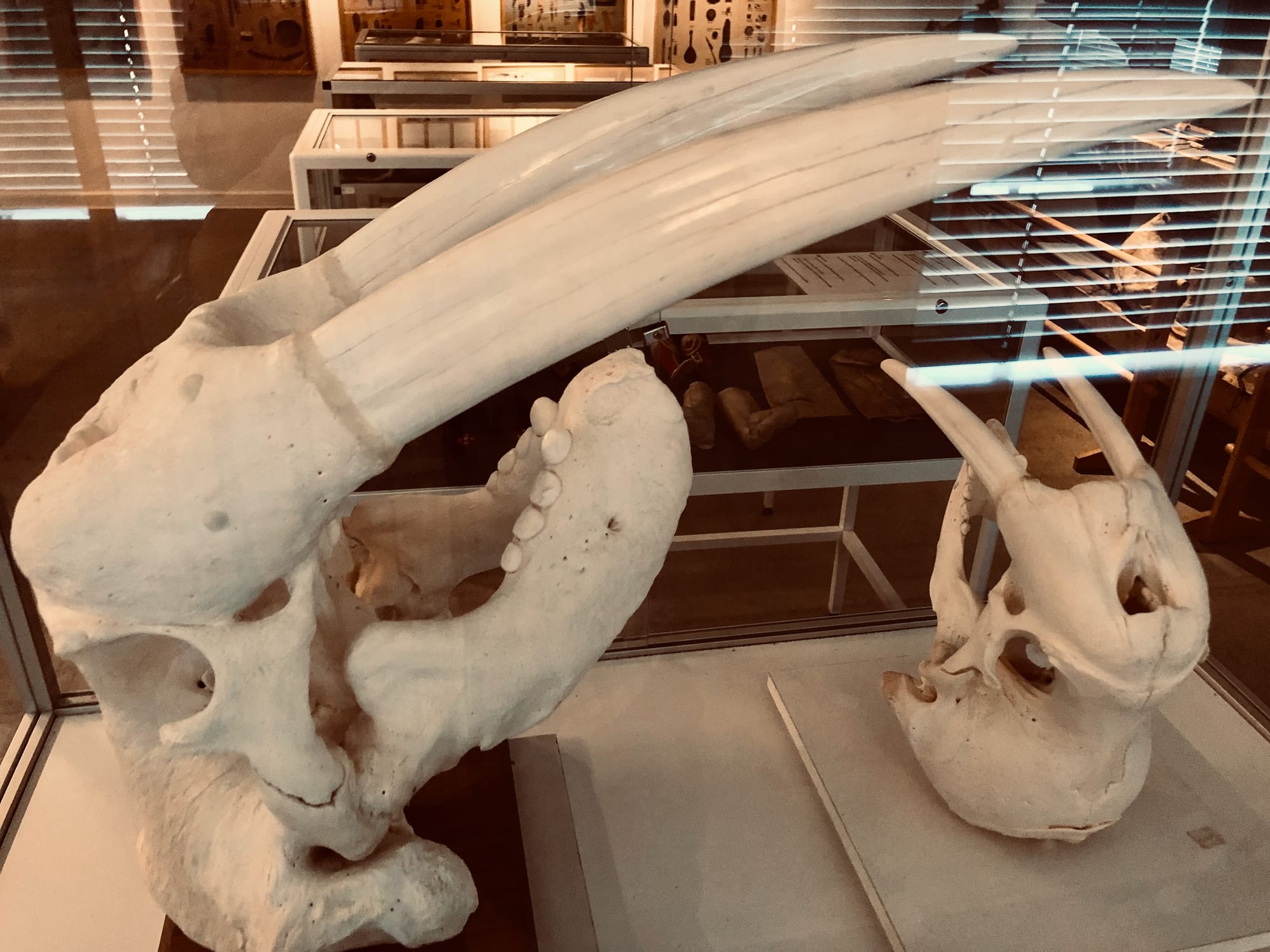
Thorstein and his friends, all well-born Icelanders, remained in Greenland for four years. There was still profitable trade to be done. Greenland’s trade with medieval Europe was more important than Iceland’s, for example. Iceland was an island of sheep and cod; Greenland had access to walrus and narwhal ivory, both much in demand for luxury goods produced across Europe (walrus ivory, in particular, was cheaper than elephant ivory, at least until the Portuguese opened up new routes for elephant ivory which avoided the Arabic/Mediterranean route; narwhal tusks were valued also for medicinal properties). Thorstein would have brought iron bars, grain and honey to trade with, all much in demand in Greenland. The walrus and narwhal hunt took place in summer along the western coast of Greenland, and presumably Thorstein and his friends took part. At the end of their stay, they sailed directly to Norway, since walrus and narwhal tusk were not much use to anyone in Iceland.
Sigrid Björnsdóttir, daughter of the wealthy Icelandic landowner Björn Brynjolfsson, was already in Greenland when Thorstein arrived. She was probably in her early thirties, and a widow. Her father had been in Greenland in 1392, and she was likely at the marriageable age of fifteen at that point. At the time of her wedding, 1408, the Black Death seems not to have arrived yet in Greenland (it had arrived in Iceland only a few years before, in 1402-3, when and Sigrid’s father, and possibly her siblings, had succumbed); and the Eastern Settlement seems, from various written records, still to have been in good working order at this time. Many families attended the wedding.
...
Thule, the period of cosmography,
Doth vaunt of Hecla, whose sulphureous fire
Doth melt the frozen clime and thaw the sky;
Trinacrian Etna's flames ascend not higher:
These things seem wondrous, yet more wondrous I,
Whose heart with fear doth freeze, with love doth fry.
Thomas Weelkes
...
A year after the arrival of Thorstein at Hvalsey, the young wife of one of his followers, Steinunn Hrafnsdóttir, was caught in an adulterous relation with a Greenlander called Kollgrim. In the case brought against him, Kollgrim was accused of using witchcraft and black arts to seduce Steinunn, found guilty, and burned at the stake in Hvalsey in 1407. Steinunn, who for whatever reason was not tried alongside her lover (probably she was of higher social status); she was said to have lost her wits and died soon after.
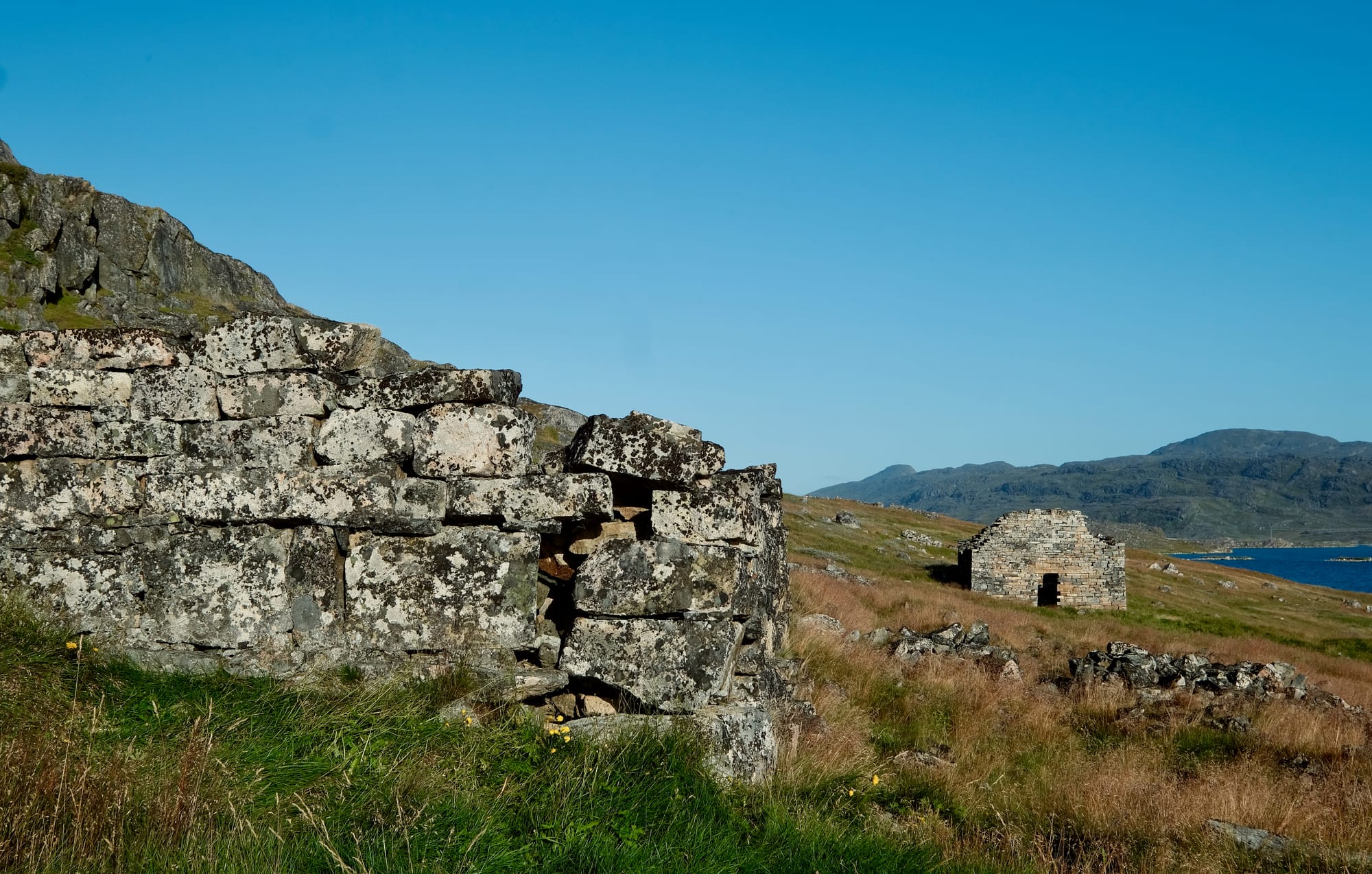
The trial or hearing would have taken place at the festal hall here, which stands near the church. It is not as well-preserved, although it is younger than the church, but it is nevertheless the best preserved medieval festal hall in all Nordic lands.
...
There are some oddities testifying to the connectedness of the place. The windows of the church are wider on the inside of the building than on the outside, a characteristic not known in Icelandic churches, but common in English churches. A pewter pendant cross found at Hvalsey also seems to have been English (although a piece of 15th century stoneware also found in front of the church is of Rhenish origin).
...
A church in the middle ages could only be consecrated if it had in it a relic. The relic would be buried in or under the altar, an activating principle of faith, but also offering a bit of ancestral continuity and connection to a wider body.
The argument is sometimes made that the ancestral dead root us in place. That as a species we stopped moving because we wished to remain with our dead. We grew more and more reluctant simply to leave them, and move on. As Robert Pogue Harrison phrases it, "human beings housed their dead before they housed themselves”.
Whatever the poetic truth of this, both logic and the evidence suggest otherwise. In a hunter-gatherer society, when someone dies, you leave them behind. A death is often a reason to move, not to stay. Bones disappear into the land, and are gone.
In the case of Hvalsey, sure enough, the bones remained, going to dust beneath the church, and the people moved on. However, anecdotal accounts and some corroborating archaeological evidence suggests that some Norse remained after the last departures, suffering from malnutrition, stunted growth, rickets.
In 1721 the Danish crown, by now a bastion of Protestant Europe and worried that its former colony might be both Catholic and thriving, out there beyond time and at the edge of the world, sent a mission to Greenland under Hans Egede; but it found only a fragmenting world sparsely peopled by resourceful Inuit, and a solitary quest chapel.
What question they asked of it, when they first stepped wondering inside, is not recorded. Nor will I record my own. But one thing is certain: to a quest chapel at the edge of the world and the edge of time, there can be no return.

Member discussion