Borges in Iceland
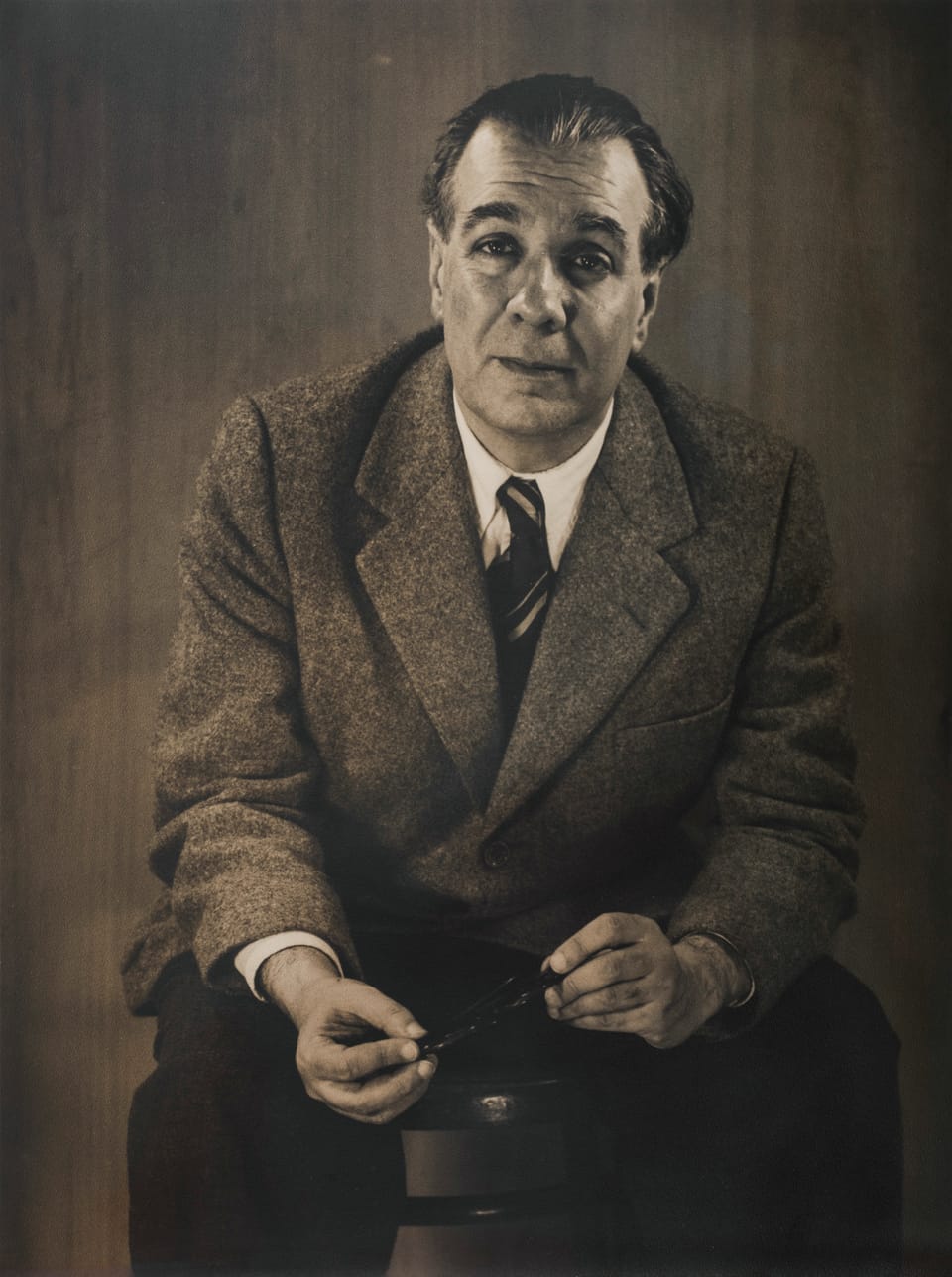
Iceland, said Jorge Luís Borges, was “the greatest revelation of my life”.
At an advanced age, blind and always veering between spritely and frail, he had suddenly began to travel. He had travelled before – he knew Europe well, had lived there as a teenager for ten years, between Geneva and Spain; but for much of his adult life he had dwelt in a tiny apartment at Calle Maipu 994 in Buenos Aires with his mother. His room was Spartan, if not monastic – an iron bedstead, a single chair, a couple of shelves of books. He worked as director of the National Library of Argentina from 1955 – the year (he noted the irony) in which blindness had finally overcome him, and taught literature at the University of Buenos Aires. And that, along with his writing, was the more-or-less of his life: a million books, a blind man with a stick, a small and stark apartment where he dwelt with his mother.
And then, in the 1960s, international fame overwhelmed him. He was, the century suddenly realised, one of its great writers. And he was consequently invited to lecture at American universities, awarded honorary degrees and doctorates and prizes from institutions all over the world; and so, blind but open to the otherness and quiddity of place, he travelled. A little maniacally. A little non-stop. Relishing everything. He travelled usually with his mother, and then later, as she grew to old to accompany him, with a young woman, María Kodama, whom he advertised as his travelling companion and secretary, but who was in fact his partner, and would become in his last months his wife.
...
And then, in 1971, he visited Iceland.
Iceland, and the Norse world, had been for years a minor obsession. It was the land of the sagas and also, in his personal mythology, the land, or a land, of his forebears – his paternal grandmother was a woman called Fanny Haslam who was originally from Hanley in Staffordshire, but whose family had its roots in Northumberland, and who had always spoken to her son and grandson in English. So not only was Borges bilingual, but he had a fancy that he had Viking blood. He had, partly in consequence and for a long time, been making a study of Anglo-Saxon and Old Norse with a group at the university where he taught.
He arrived in Iceland for the first time on April 13th 1971.
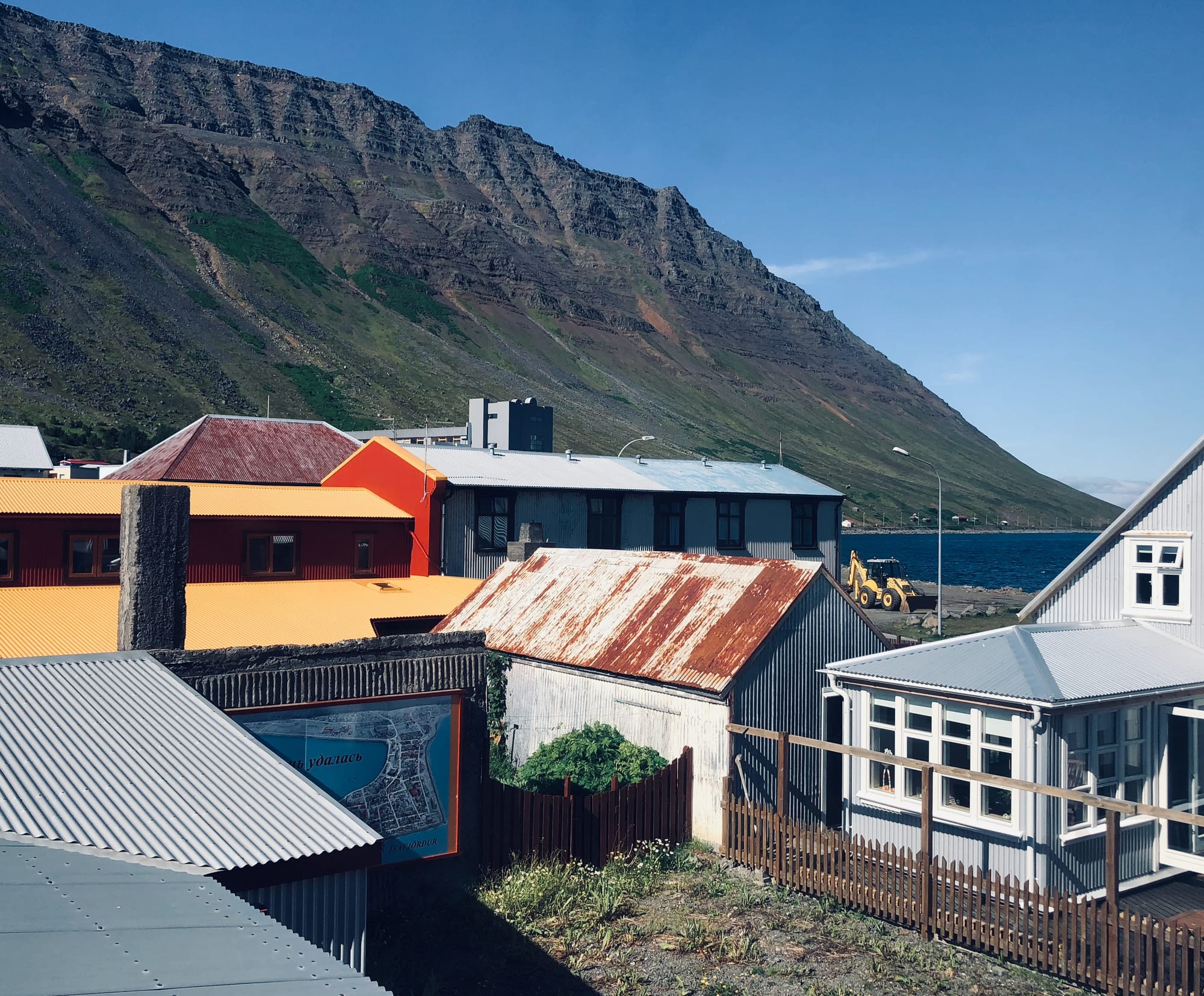
He went about. He visited the site of Althing, the parliament of the Icelanders, located at the spot where the island divides the North American from the Eurasian plates, and he visited the house of Snorri Sturluson at Borgafjord. He met a group of very tall and sombre Icelandic poets and writers, and spent an evening getting drunk with them. And so. Borges at large.
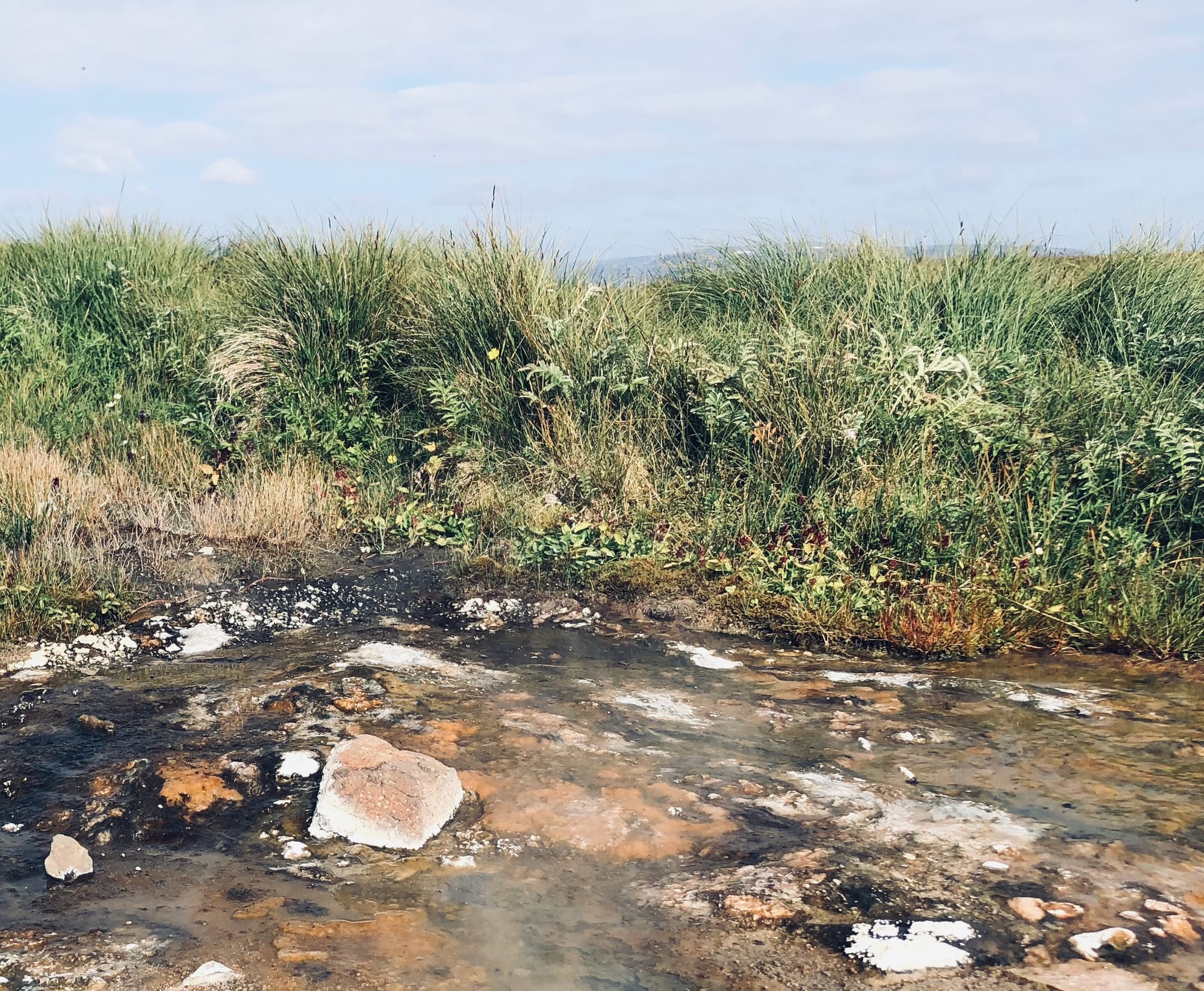
What does an old blind poet make of Iceland? Borges described it as “a kind of ecstasy” and “a kind of dream come true”. “I often thought,” he said, “I could hear the voices of those illustrious Scandinavians intoning their beautiful songs.” But what can he make of it, sensorially? I have been to Iceland a number of times. Returning, it all comes back, its oddity. It is sulphurous, for one thing. Many of those old Icelanders (for all that they were great travellers themselves) can have known nothing else. The earth was a sulphurous place. To a blind poet, it will have been the first distinguishing characteristic. Turn the tap and brimstone emerges. The showers gush sulphur. And then, almost wherever you go, the land gently fumes. Marsh water is oracular, bubbles gently with ideas. The curlews are not curlews, but, look closely, whimbrels. Fields for fodder are mere cut strips in the hillsides, an inversion of pastoral landscape. Nothing is quite the thing you think.
...
One of the authors I delight in is an old blind Argentinian called Jorge Luis Borges…
By an extraordinary coincidence the composer Peter Maxwell Davies, who is coming to settle in Rackwick soon, was in Buenos Aires, conducting and lecturing, and he met J.L. Borges by accident. Later they had a meal together and a long conversation. It turned out that the Norse sagas are among Borges’ favourite reading….
So when Peter Maxwell Davies next came to Orkney, one of the first things he did was to get Charles Senior to despatch the Anderson Orkneyinga Saga to Borges in the Argentine. How intriguing, to think of that great old man sitting back in his chair while somebody reads to him the story of the first Earl Rognvald and his dog in the seaweed at Papa Stronsay that terrible Yule; and of Sweyn Asleifson in a Dublin street with the sword flashes all about him…
George Mackay Brown, 1974, Letters from Hamnavoe
...
Following his first visit to Iceland, Borges (after a stay in Isreal to receive yet another prize) went to St. Andrews in Scotland, where he stayed with the poet and translator Alastair Reid. At one point he asked Reid a favour: would he take him down to the seafront and leave him some time there alone? Reid did so, bringing him to a spot on the promenade near the cathedral ruins, and the walked off, only to notice that the blind poet was facing the wrong way, inland. It was the North Sea in whose presence he wanted to dwell a little, the sea over which his Viking ancestors had once sailed. Quite possibly he was still under the influence of Reid's hash brownies, which he had liberally snacked on.
Reid went back and oriented him seaward.
...
...
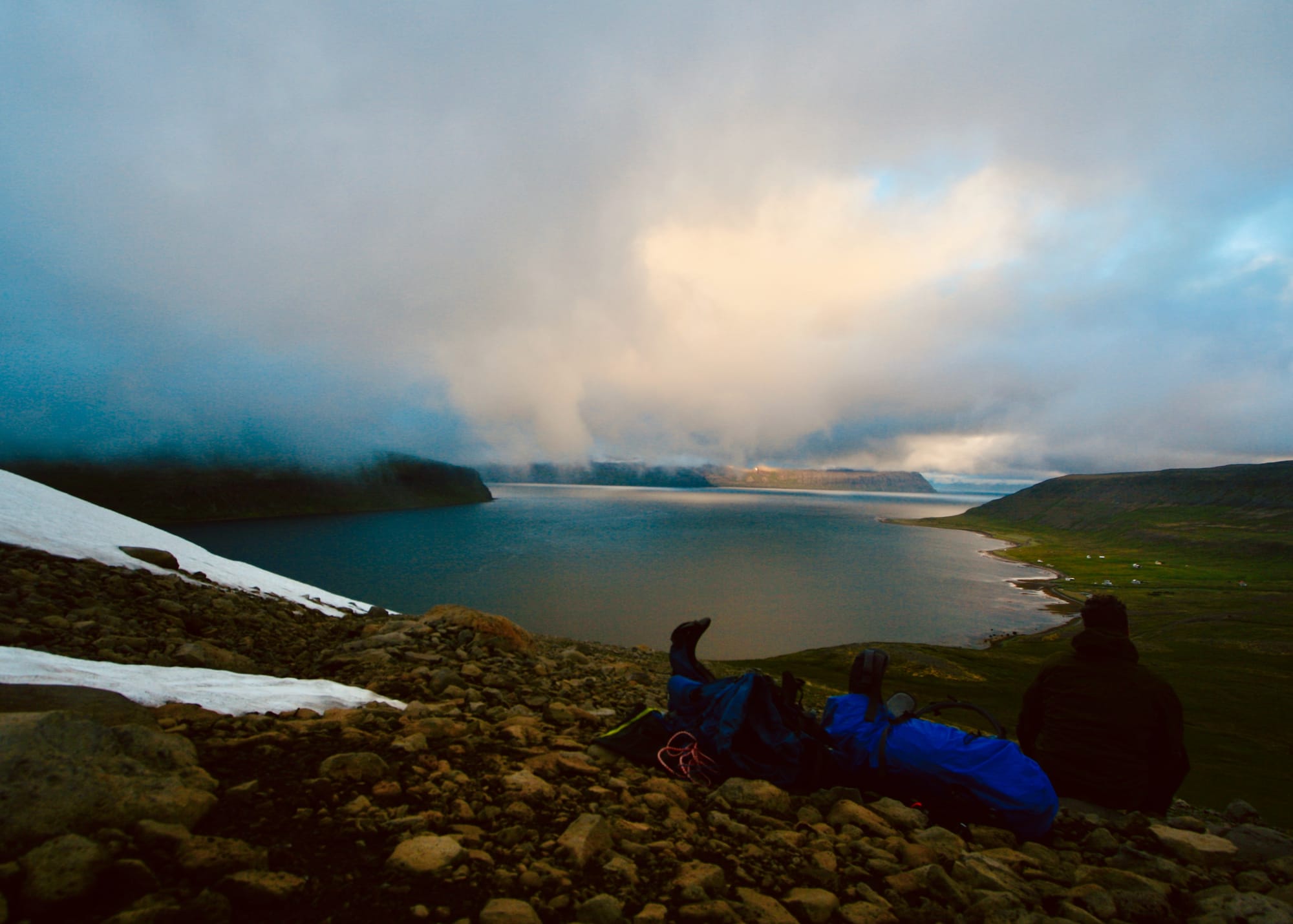
If you travel far enough to the north, you find the place of sufficient strangeness. Similarly, if you travel far enough to the south. In Canto XXVI of the Inferno, Dante meets Ulysses, burning sempiternally in a two-pronged flame. Virgil, Dante’s guide, requests Ulysses to recount for them his final voyage, and he does so roughly as follows:
…after having left Circe…neither the sweetness of his son, nor the reverence Laertes inspired in him, nor the love of Penelope could conquer the ardor in his breast to know the world and the defects and virtues of men. With his last ship and the few loyal men left to him, he ventured upon the open seas; they arrived, old men by then, at the narrows where Hercules set his columns. At that outer limit marked by a god to ambition or audacity, he urged his comrades on, to see, since so little life was left to them, the unpeopled world, the untraveled seas of the antipodes. He reminded them of their origin, he reminded them that they were not born to live like brutes, but to seek virtue and knowledge. They sailed toward the sunset, and then to the south, and saw all the stars that the southern hemisphere alone encompasses. For five months their prow cleaved the ocean, and one day they caught sight of a dark mountain on the horizon. It seemed to them higher than any other, and their souls rejoiced. This joy soon turned to grief, for a tempest arose that spun the ship around three times and sank it on the fourth, as pleased Another, and the sea closed over them.
The account given here is that of Borges, in an essay on Ulysses’s crime first published in La Nacíon on 30th May, 1948 as El último viaje de Ulises, and subsequently collected in Nueve ensayos dantescos (1982).
Borges wants to argue that this lengthy episode is not the odd digression which many of the commentators on Dante (‘from the anonymous Florentine to Raffaele Andreoli’) feel it to be, but an analogue of Dante’s own journey – not the Dante of the poem journeying through creation, but the flesh-and-blood Dante traversing, as it were, his own great and lengthening poem, day after day. His poetic journey, in other words. In castigating Ulysses’s curiosity in venturing to what the commentators agreed was Purgatory itself (a solitary mountainous island in the southern ocean, in Dante’s telling), he is self-castigating his own hubris, his quasi-diabolical powers of invention, his heretical elevation of a dead former girlfriend to the sphere of the Virgin.
For Borges, a poetic journey, or a journey of work, was akin to an actual journey (the Russian poet Osip Mandelstam wonders in his essay on Dante how many pairs of sandals he must have worn out in the composition of the Divine Comedy); after all, reading a book, Borges somewhere said, was no different from any other life experience.
Journeys, however, resolve themselves in the mind into points, destinations, pauses, and ultimately places; and later in life, Borges gravitated to the belief that out there, up there, down there somewhere, was a transformational place. It was an empirical observation. There were places unlike other places. Places which would, if you allowed them, organise your private world for you. Which would make up the landfalls on your private periplus.
Borges noted some of these places in a late poem, Yesterdays (entitled in English, but written in Spanish).
El azar o el destino, esos dos nombres
de una secreta cosa que ignoramos,
me prodigaron patrias: Buenos Aires,
Nara, donde pasé una sola noche,
Ginebra, las dos Córdobas, Islandia…
Chance or destiny, those two names
for a secret thing we’ll never understand,
lavished me with homelands: Buenos Aires,
Nara, where I spent a single night,
Geneva, Iceland, the two Córdobas…
In Geneva Borges had grown up and been schooled; he would also die and be buried there, by choice. In Nara, on his first trip to Japan, he had visited the Daibutsu-den, a Buddhist temple (where, blind, he had especially wanted to know whether the statue of the Buddha, reputed to be the largest in the world, had “something terrible in that face” – Borges had spent his youth and much of the rest of his life convinced of and depressed by a quasi-Buddhist vision of the non-existence, hence the non-persistence, of the self); he had also been amazed that the deer which roam the streets there had been sufficiently confiding to allow him to stroke them, had drunk green tea, worn a kimono, slept on the floor; everything delighted him by its strangeness and newness, and he subsequently remarked to his half-Argentine, half-Japanese lover, María Kodama, that here he had “truly entered into the spirit of Japanese life”.
As with Japan, his visits to Iceland were oddly brief, light, superficial, and yet profound. It was in Iceland on that first visit that he had found the courage to declare his love to María, and the joy to find it reciprocated.
Many homelands then. A prodigality of homelands. In the end, he was discovering in advanced old age, how our experience of life might resolve itself, through zones temperate or arid or tropical, to strange fixed poles. Fixed, or slightly wandering.

Member discussion